

Skylark aircraft library
Know what you are looking at
Where the aircraft over Ireland came from, how to tell them apart from the ground, and what is worth knowing about each. Every fact is sourced.
Find an aircraft by what you notice
Try a name, a type code, or a visible detail such as winglets, propeller or six wheels. These are clues to explore, rather than a confirmed identification.
29 articles and guides
No match in this library yet. Try a broader clue or clear the filters.
Explore 59 sourced recognition clues
What can you see clearly?
Choose a part of the aircraft and read what to check. These are reference clues, not an automatic identification. Keep details you cannot see uncertain; use several clues and the reported type together.
Structured clues cover 15 of 24 type articles so far. Other aircraft can share these features. A missing clue does not rule out an aircraft.
59 reference clues
No structured clue for this combination yet. Try all parts or read the full type articles below.
Add two candidates to compare their other clues.
Airbus A320 · Cockpit
Look for the clipped upper rear corner of the last cockpit side window in a clear side photo. [9]
Clue checked 30 September 2026
Airbus A320 · Engine intake
Round nacelles contrast with the flattened underside of a 737 Next Generation intake. [9]
Clue checked 30 September 2026
Airbus A320 · Wingtip
Small triangular wingtip fences indicate an original A320-family aircraft; Sharklets also appear on some originals. [8]
Clue checked 30 September 2026
Airbus A320 · Exit caveat
An A320 has two overwing exits per side; an A319 usually has one, but high-density A319s can have two. [8]
Clue checked 30 September 2026
Airbus A320neo · Engines
The larger engine diameter is the main visual clue compared with an original A320-family aircraft. [11]
Clue checked 30 September 2026
Airbus A320neo · Wingtip
All neos have Sharklets, but some originals do too: an upturned wingtip alone does not establish neo. [11]
Clue checked 30 September 2026
Airbus A320neo · Cockpit mask
Black paint around the cockpit is common on neos, but optional and also found on some originals. [11]
Clue checked 30 September 2026
Airbus A320neo · A321 caveat
Some A321neos replace the second door with overwing exits; use the longer body and door behind the wing together. [11]
Clue checked 30 September 2026
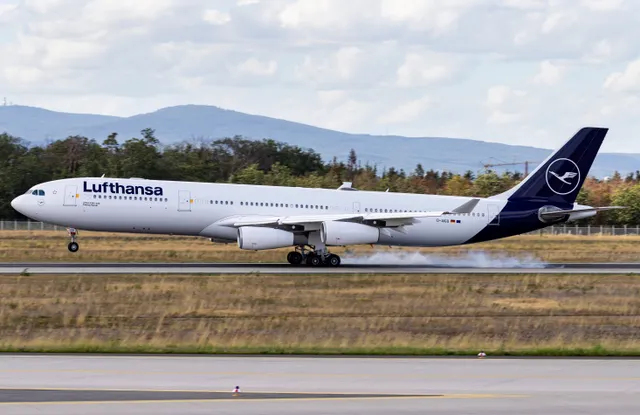
Airbus A340 · Engines
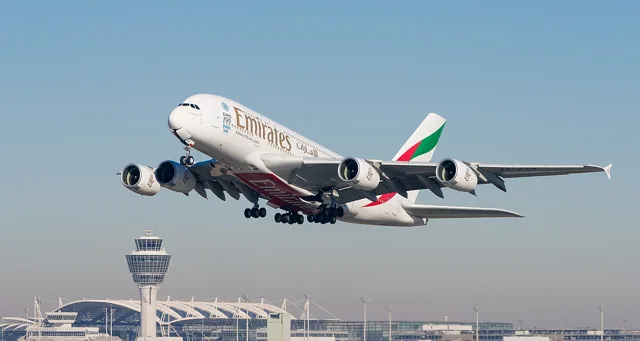
Four, two under each wing, a layout it shares with the Boeing 747 and Airbus A380. [12]
Clue checked 5 October 2026
Airbus A340 · Centre gear
A third main gear leg under the middle of the fuselage, with two wheels on the -200 and -300 and four on the -500 and -600. [4] [5] [12]
Clue checked 5 October 2026
Airbus A340 · Main gear
Two four-wheel bogies under the wings, plus a two-wheel nose gear. [4] [12]
Clue checked 5 October 2026
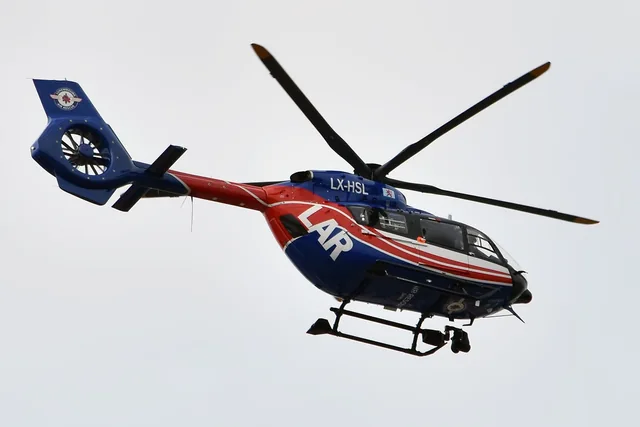
Airbus H145 and EC145 · Tail
Modern H145 has a shrouded Fenestron tail rotor; earlier EC145 C-2 has an exposed rotor. [2] [8]
Clue checked 30 September 2026
Airbus H145 and EC145 · Main rotor
Four-bladed and five-bladed H145s exist; count only in a clear still photograph. [2] [5]
Clue checked 30 September 2026
Airbus H145 and EC145 · Rear access
Rear-loading clamshell doors are a useful close-up cue. [6]
Clue checked 30 September 2026
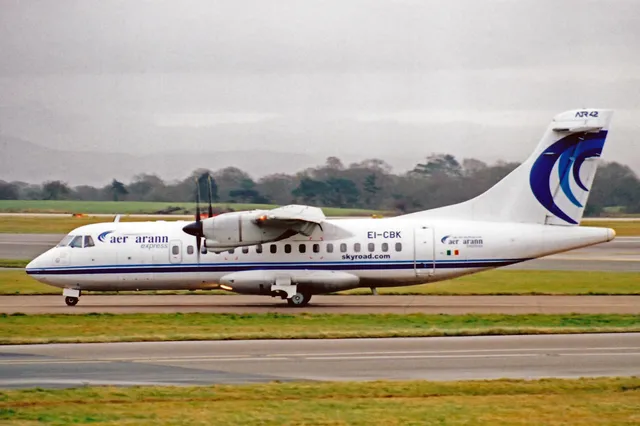
ATR 42 · Wing
Mounted on top of the fuselage [16] [17]
Clue checked 5 October 2026
ATR 42 · Tail
T-tail, with the tailplane on top of the fin [16] [17]
Clue checked 5 October 2026
ATR 42 · Main wheels
Fold into blister fairings on the lower fuselage, not into the engine nacelles [16] [17]
Clue checked 5 October 2026
ATR 42 · Windows
Six passenger windows behind the wing on each side; an ATR 72 has ten [16]
Clue checked 5 October 2026
ATR 42 · Cockpit
Six cockpit windows, where a Bombardier-built Dash 8 has four [16]
Clue checked 5 October 2026
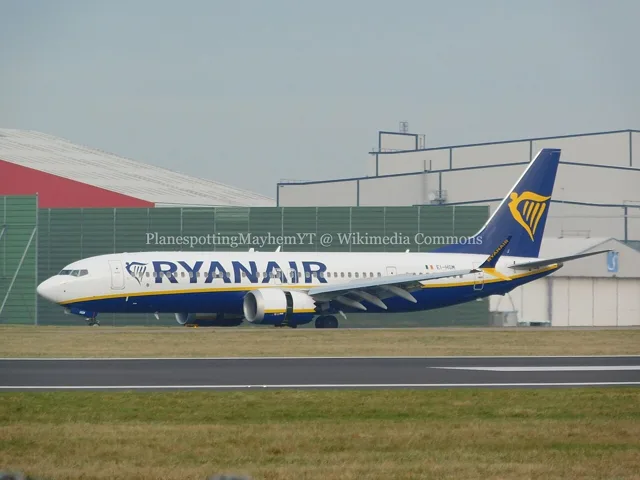
Boeing 737 MAX · Engine position
Engines are wider and sit further ahead of the wing than on a Next Generation 737. [10]
Clue checked 30 September 2026
Boeing 737 MAX · Engine rear edge
Look for chevrons: small sawtooth ridges around the back of the nacelles. [10]
Clue checked 30 September 2026
Boeing 737 MAX · Wingtip
The upper and lower winglet sections are roughly equal in size, unlike the smaller lower fin on NG split scimitars. [10]
Clue checked 30 September 2026
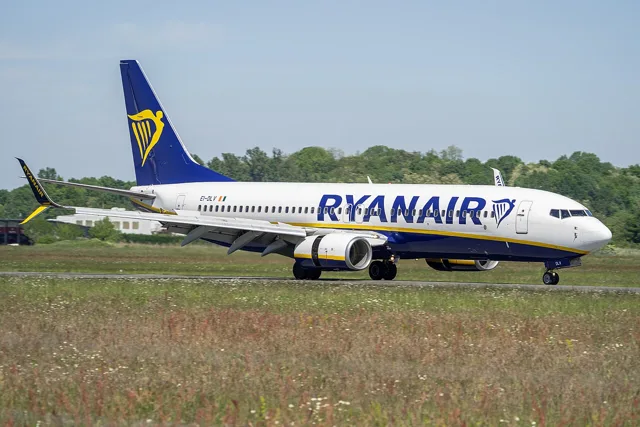
Boeing 737-800 · Engine intake
The flattened underside of the intake helps distinguish this 737 generation from an A320. [9]
Clue checked 30 September 2026
Boeing 737-800 · Wingtip
If fitted, blended winglets sweep upward; split scimitars add a smaller lower fin with pointed tips. [7]
Clue checked 30 September 2026
Boeing 737-800 · Against the MAX
MAX engines are wider, sit further ahead of the wing and have sawtooth rear edges. Check these together. [7]
Clue checked 30 September 2026
Boeing 737-800 · Landing lights
On the Next Generation 737, deployed outboard landing lights extend beneath the fuselage. [7]
Clue checked 30 September 2026
Boeing 777 · Main wheels
Six wheels on each main gear leg; use another cue too because an A350-1000 also has six. [14]
Clue checked 30 September 2026
Boeing 777 · Tail cone
The rear fuselage ends in a flat, squared-off blade, unlike the rounded cone on a 767. [14]
Clue checked 30 September 2026
Boeing 777 · Variant wingtip
Raked tips identify the 777-200LR, 777F and 777-300ER group; original -200, -200ER and -300 tips are not raked. [14]
Clue checked 30 September 2026
Boeing 777 · Passenger doors
On original passenger variants, four doors per side indicate the shorter -200 family; five indicate the longer -300 family. [14]
Clue checked 30 September 2026
Boeing 787 Dreamliner · Cockpit windows
Four cockpit windows, compared with six on the 767, 777 and A350. [9]
Clue checked 30 September 2026
Boeing 787 Dreamliner · Engine rear edge
The nacelles have serrated fan exhaust edges; combine this with the cockpit and wing shape. [9]
Clue checked 30 September 2026
Boeing 787 Dreamliner · Wings
Long wings curve upward and end in swept-back raked tips, rather than the A350's upturned winglets. [9]
Clue checked 30 September 2026
Boeing 787 Dreamliner · Variant clue
Between the first two doors, roughly 10 cabin windows suggest -8, 15 suggest -9 and 20 suggest -10; confirm the variant separately. [9]
Clue checked 30 September 2026
Bombardier CRJ · Tail
T-tail, with the tailplane on top of the fin (CRJ700) [5]
Clue checked 5 October 2026
Bombardier CRJ · Wing
Low wing with winglets (CRJ700) [5]
Clue checked 5 October 2026
Bombardier CRJ · Engines
Not under the wings: Flightradar24 counts the E-Jets as the only regional jets in its guide with underwing engines rather than engines beside the tail [15]
Clue checked 5 October 2026
Bombardier CRJ · Fuselage
Slim: the Challenger's fuselage was lengthened, not widened [2]
Clue checked 5 October 2026
Cessna 172 Skyhawk · Wing
Above the cabin, supported by diagonal struts [1]
Clue checked 30 September 2026
Cessna 172 Skyhawk · Engine
One propeller at the nose [1] [3]
Clue checked 30 September 2026
Cessna 172 Skyhawk · Wheels
Fixed nosewheel and two main wheels [1]
Clue checked 30 September 2026
Cessna 172 Skyhawk · Tail
Conventional tailplane, below the top of the fin [1]
Clue checked 30 September 2026
De Havilland Canada Dash 8 · Engines
Two turboprops; the Q400 turns six-blade propellers, the Q300 four-blade ones [3] [4]
Clue checked 5 October 2026
De Havilland Canada Dash 8 · Wheels
Main landing gear folds into long engine nacelles under the wing, not into blisters on the fuselage [10]
Clue checked 5 October 2026
De Havilland Canada Dash 8 · Cockpit
Four cockpit windows on a Bombardier-built Dash 8, where an ATR has six [10]
Clue checked 5 October 2026
De Havilland Canada Dash 8 · Tail
The Q400 carries a small bullet-shaped fairing on its tail [10]
Clue checked 5 October 2026
Embraer ERJ 145 family · Engines
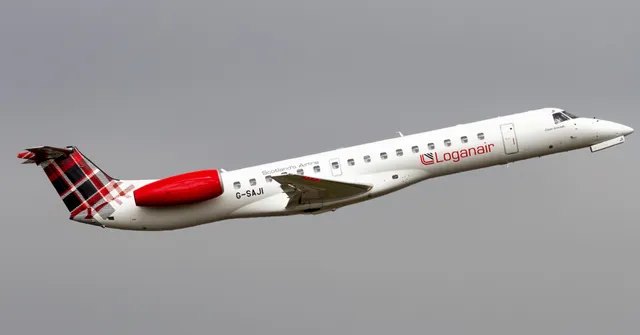
Two jet engines on the rear fuselage, below a T-tail, with a low wing [3] [12]
Clue checked 5 October 2026
Embraer ERJ 145 family · Nose
A long, pointed nose cone stretching ahead of four cockpit windows [12]
Clue checked 5 October 2026
Embraer ERJ 145 family · Tail cone
Pointed, with the APU exhaust pipe sticking out of the very end [12] [13]
Clue checked 5 October 2026
Embraer ERJ 145 family · Fin
A triangular fillet on the leading edge of the fin; a CRJ has an air inlet at the base of its fin instead [14]
Clue checked 5 October 2026
Embraer ERJ 145 family · Length
The versions differ mainly in fuselage length: 26.33 m on the ERJ 135 against 29.87 m on the ERJ 145 [4] [5]
Clue checked 5 October 2026
Leonardo AW139 · Main rotor
Five blades; a clear still image is more useful than a blurred rotor disc. [2]
Clue checked 30 September 2026
Leonardo AW139 · Tail rotor
Conventional four-bladed rotor, unlike the modern H145's enclosed Fenestron. [2] [7]
Clue checked 30 September 2026
Leonardo AW139 · Undercarriage
Retractable wheels in a tricycle arrangement, so visibility changes with gear position. [2]
Clue checked 30 September 2026
Leonardo AW139 · Cabin access
Large sliding cabin door on each side; cockpit access has separate hinged doors. [5]
Clue checked 30 September 2026
Pilatus PC-12 · Propeller
One nose-mounted propeller, with no engines on the wings [1]
Clue checked 30 September 2026
Pilatus PC-12 · Tail
Horizontal tailplane on top of the fin [1]
Clue checked 30 September 2026
Pilatus PC-12 · Wing
Low wing with winglets [1]
Clue checked 30 September 2026
Pilatus PC-12 · Wheels
Retractable gear; a clean underside in cruise is consistent with this type [1] [2]
Clue checked 30 September 2026
Put two aircraft side by side
Compare the visible clues and sourced facts. Specifications may describe different variants; read each label before comparing numbers.
Choose two aircraft to compare.
Airbus A220
BCS1 · BCS3
Key facts
Airbus A320
A320 · A319 · A321 · A318
Recognition clues
- Cockpit
- Look for the clipped upper rear corner of the last cockpit side window in a clear side photo. [9]
- Engine intake
- Round nacelles contrast with the flattened underside of a 737 Next Generation intake. [9]
- Wingtip
- Small triangular wingtip fences indicate an original A320-family aircraft; Sharklets also appear on some originals. [8]
- Exit caveat
- An A320 has two overwing exits per side; an A319 usually has one, but high-density A319s can have two. [8]
Key facts
- Original (ceo) models built
- 8,101 [6]
Airbus A320neo
A20N · A19N · A21N
Recognition clues
- Engines
- The larger engine diameter is the main visual clue compared with an original A320-family aircraft. [11]
- Wingtip
- All neos have Sharklets, but some originals do too: an upturned wingtip alone does not establish neo. [11]
- Cockpit mask
- Black paint around the cockpit is common on neos, but optional and also found on some originals. [11]
- A321 caveat
- Some A321neos replace the second door with overwing exits; use the longer body and door behind the wing together. [11]
Key facts
- Programme launched
- 1 December 2010 [2]
- First flight
- 25 September 2014 [2]
- First delivery
- 20 January 2016, to Lufthansa [3]
- A321neo length
- 44.51 m [5]
Airbus A330
A332 · A333 · A337 · A338 · A339
Key facts
- First flight
- 2 November 1992 [3]
- Entry into service
- 1994, with Air Inter [2]
- Length
- 58.82 m (-200), 63.66 m (-300) [1]
- Engines
- Two: GE CF6-80E1, Pratt & Whitney PW4000 or Rolls-Royce Trent 700; Trent 7000 on the neo [1] [2]
- Delivered
- 1,672 by August 2026 [10]
Airbus A340
A342 · A343 · A345 · A346
Recognition clues
- Engines
- Four, two under each wing, a layout it shares with the Boeing 747 and Airbus A380. [12]
Key facts
- ICAO type designators
- A342 (-200), A343 (-300), A345 (-500), A346 (-600) [1]
- Length (-200, -300)
- 59.39 m (-200), 63.69 m (-300) [4]
- Wingspan (-200, -300)
- 60.3 m [4]
Airbus A350
A359 · A35K
Key facts
- Length
- 66.80 m (-900), 73.78 m (-1000) [1]
- Wingspan
- 64.75 m [1]
- Maximum take-off weight
- 283 t (-900), 319 t (-1000) [1]
- Composites
- 53% of the airframe [1]
- Delivered
- 734 by August 2026 [9]
Airbus A380
A388
Key facts
- First flight
- 27 April 2005, Toulouse [2]
- Type certificate
- 12 December 2006 (A380-841, -842) [3]
- Length
- 73 m [1]
- Wingspan
- 79.8 m [1]
- Delivered
- 251, to 14 customers [1]
Airbus H145 and EC145
EC45
Recognition clues
- Tail
- Modern H145 has a shrouded Fenestron tail rotor; earlier EC145 C-2 has an exposed rotor. [2] [8]
- Rear access
- Rear-loading clamshell doors are a useful close-up cue. [6]
Key facts
- Type code
- EC45, shared with EC145 and related models [1]
- Current main rotor
- Five blades [2]
- Rotor diameter, current H145
- 10.8 m [3]
- Recommended cruise, current H145
- 130 knots [3]
- Powerplant, current H145
- Two Safran Arriel 2E engines [4]
- Five-bladed EASA certification
- 19 June 2020 [4]
ATR 42
AT43 · AT44 · AT45 · AT46
Recognition clues
- Windows
- Six passenger windows behind the wing on each side; an ATR 72 has ten [16]
- Cockpit
- Six cockpit windows, where a Bombardier-built Dash 8 has four [16]
Key facts
- ICAO type designators
- AT43, AT44, AT45, AT46 [1]
- First flight
- 16 August 1984 [2]
- Entry into service
- 3 December 1985, Air Littoral [3]
- First 42-600 delivery
- November 2012, Precision Air Services [5]
- Length (42-600)
- 22.67 m [4]
- Compared with the ATR 72
- Fuselage 4.5 m shorter [14]
- Short-runway 42-600S
- Development halted, November 2024 [13]
ATR 72
AT72 · AT73 · AT75 · AT76
Key facts
- First flight
- 27 October 1988 [2]
- Entry into service
- 27 October 1989, Finnair [2]
- Length (72-600)
- 27.17 m [6]
- Wingspan (72-600)
- 27.05 m [6]
- Seats (72-600)
- Up to 78 [6]
- Engines (72-600)
- Two Pratt & Whitney Canada PW127M turboprops [5]
- Range (72-600, full cabin)
- 1,370 km [6]
Boeing 737 MAX
B38M · B39M · B37M · B3XM
Recognition clues
- Engine position
- Engines are wider and sit further ahead of the wing than on a Next Generation 737. [10]
- Engine rear edge
- Look for chevrons: small sawtooth ridges around the back of the nacelles. [10]
- Wingtip
- The upper and lower winglet sections are roughly equal in size, unlike the smaller lower fin on NG split scimitars. [10]
Key facts
- First flight
- 29 January 2016 (737 MAX 8) [1]
- Length
- 39.5 m (737-8), 42.11 m (737-9) [2]
- Wingspan
- 35.92 m [2]
- Orders
- More than 7,200 (August 2026) [6]
- Delivered
- More than 2,300 by the end of June 2026 [6]
Boeing 737-800
B738 · B737 · B739 · B736
Recognition clues
- Engine intake
- The flattened underside of the intake helps distinguish this 737 generation from an A320. [9]
- Wingtip
- If fitted, blended winglets sweep upward; split scimitars add a smaller lower fin with pointed tips. [7]
- Against the MAX
- MAX engines are wider, sit further ahead of the wing and have sawtooth rear edges. Check these together. [7]
- Landing lights
- On the Next Generation 737, deployed outboard landing lights extend beneath the fuselage. [7]
Key facts
- Launched
- 5 September 1994, Farnborough [1]
- First flight
- 31 July 1997 [1]
- Length
- 39.5 m (129 ft 6 in) [1]
- Last commercial delivery
- January 2020 [4]
Boeing 747
B741 · B742 · B743 · B744 · B748 · B74S
Key facts
- Last delivery
- 31 January 2023, a 747-8F for Atlas Air [1]
- Built
- 1,574, all at Everett [1]
- Length (747-8F)
- 76.3 m [6]
Boeing 757
B752 · B753
Key facts
- First flight
- 19 February 1982 [2]
- FAA type certificate
- 21 December 1982 (757-200) [3]
- Length
- 47.32 m (757-200), 54.4 m (757-300) [3]
- Wingspan
- 38.02 m [3]
- Engines
- Rolls-Royce RB211-535, or Pratt & Whitney PW2037, PW2040 or PW2043 [3]
- Built
- 1,050 [1]
- Last delivery
- April 2005, Shanghai Airlines [1]
Boeing 767
B762 · B763 · B764
Key facts
Boeing 777
B772 · B77L · B773 · B77W · B778 · B779
Recognition clues
- Main wheels
- Six wheels on each main gear leg; use another cue too because an A350-1000 also has six. [14]
- Tail cone
- The rear fuselage ends in a flat, squared-off blade, unlike the rounded cone on a 767. [14]
- Variant wingtip
- Raked tips identify the 777-200LR, 777F and 777-300ER group; original -200, -200ER and -300 tips are not raked. [14]
- Passenger doors
- On original passenger variants, four doors per side indicate the shorter -200 family; five indicate the longer -300 family. [14]
Key facts
- First flight
- 12 June 1994 [1]
- 180-minute ETOPS
- Approved 30 May 1995, at entry into service [1]
- 777-300 length
- 242 ft 4 in (73.9 m) [3]
- 777X first flight
- 25 January 2020 [5]
- Built
- More than 1,700 (May 2025) [2]
Boeing 787 Dreamliner
B788 · B789 · B78X
Recognition clues
- Cockpit windows
- Four cockpit windows, compared with six on the 767, 777 and A350. [9]
- Engine rear edge
- The nacelles have serrated fan exhaust edges; combine this with the cockpit and wing shape. [9]
- Wings
- Long wings curve upward and end in swept-back raked tips, rather than the A350's upturned winglets. [9]
- Variant clue
- Between the first two doors, roughly 10 cabin windows suggest -8, 15 suggest -9 and 20 suggest -10; confirm the variant separately. [9]
Key facts
- First flight
- 15 December 2009 [1]
- First delivery
- 26 September 2011, to All Nippon Airways [2]
- Variants
- 787-8, 787-9, 787-10 [7]
- Airframe
- About 50% composites by weight [3]
- Cabin altitude
- 6,000 ft [3]
- Delivered
- More than 1,270 (Boeing, September 2026) [3]
Bombardier CRJ
CRJ1 · CRJ2 · CRJ7 · CRJ9 · CRJX
Recognition clues
- Tail
- T-tail, with the tailplane on top of the fin (CRJ700) [5]
- Wing
- Low wing with winglets (CRJ700) [5]
- Engines
- Not under the wings: Flightradar24 counts the E-Jets as the only regional jets in its guide with underwing engines rather than engines beside the tail [15]
- Fuselage
- Slim: the Challenger's fuselage was lengthened, not widened [2]
Key facts
- ICAO type designators
- CRJ1, CRJ2, CRJ7, CRJ9, CRJX [1]
- Programme launched
- 31 March 1989 [2]
- First flight
- 10 May 1991, Montreal [3]
- Entry into service
- 2 November 1992, Lufthansa CityLine [3]
- Built
- 1,945, the last reported on 2 March 2021 [13]
Cessna 172 Skyhawk
C172
Recognition clues
- Wing
- Above the cabin, supported by diagonal struts [1]
- Wheels
- Fixed nosewheel and two main wheels [1]
- Tail
- Conventional tailplane, below the top of the fin [1]
Key facts
- ICAO type designator
- C172 [1]
- Wing position
- High, with supporting struts [1]
- Landing gear
- Fixed tricycle [1]
- Current Skyhawk wingspan
- 11.00 m [2]
- Current Skyhawk length
- 8.3 m [2]
- Current Skyhawk maximum occupants
- Four, including the pilot [2]
De Havilland Canada Dash 8
DH8A · DH8B · DH8C · DH8D
Recognition clues
- Wheels
- Main landing gear folds into long engine nacelles under the wing, not into blisters on the fuselage [10]
- Cockpit
- Four cockpit windows on a Bombardier-built Dash 8, where an ATR has six [10]
- Tail
- The Q400 carries a small bullet-shaped fairing on its tail [10]
Key facts
- First flight
- 20 June 1983, prototype C-GDNK [5]
- Length (Dash 8-400)
- 32.81 m [4]
- Wingspan (Dash 8-400)
- 28.4 m [4]
- Seats (Dash 8-400)
- 82 at 30 inch pitch as standard, up to 90 [9]
Embraer E-Jets
E170 · E75L · E75S · E190 · E195 · E290 · E295
Key facts
- First flight (E170)
- February 2002, São José dos Campos [3]
- First flight (E190-E2)
- 23 May 2016 [7]
- Delivered
- 1,943 E-Jets and E2s by the end of 2025 [6]
Embraer ERJ 145 family
E135 · E145 · E45X
Recognition clues
- Nose
- A long, pointed nose cone stretching ahead of four cockpit windows [12]
- Fin
- A triangular fillet on the leading edge of the fin; a CRJ has an air inlet at the base of its fin instead [14]
Key facts
- Built
- More than 1,200 by August 2025 [7]
Leonardo AW139
A139
Recognition clues
- Main rotor
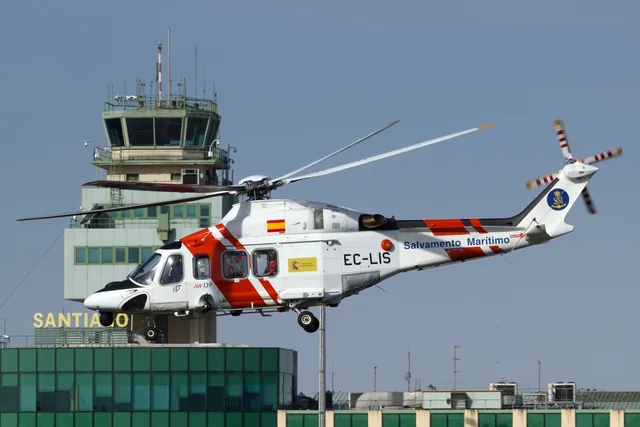
- Five blades; a clear still image is more useful than a blurred rotor disc. [2]
- Undercarriage
- Retractable wheels in a tricycle arrangement, so visibility changes with gear position. [2]
- Cabin access
- Large sliding cabin door on each side; cockpit access has separate hinged doors. [5]
Key facts
- Type code
- A139 [1]
- Main rotor
- Five blades [2]
- Tail rotor
- Four blades [2]
- Landing gear
- Retractable tricycle wheels [2]
- Main rotor diameter
- 13.8 m [3]
- Passenger capacity
- Up to 15, depending on configuration [3]
- Irish Air Corps service entry
- November 2006 [4]
Pilatus PC-12
PC12
Recognition clues
- Propeller
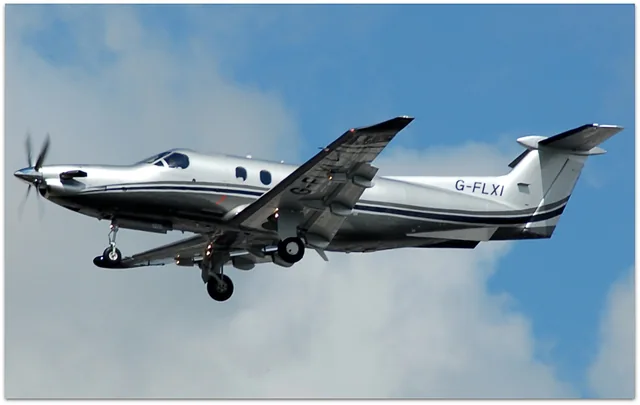
- One nose-mounted propeller, with no engines on the wings [1]
- Tail
- Horizontal tailplane on top of the fin [1]
- Wing
- Low wing with winglets [1]
Key facts
How often does Skylark see it?
Read the existing Ireland observation log to see the days each type appeared. This is what Skylark recorded, with the coverage its receivers and providers supplied; it is not a census of Irish aircraft or a prediction of your next sighting.
One aircraft seen on three different days contributes three airframe-days. Repeated reports on the same day count once. Codes are shown separately, without adding them into a family total. A logged day does not mean continuous coverage throughout that day.
Observations load when you request them.
Airbus
BCS1 · BCS3
Airbus A220
Born in Canada as the Bombardier CSeries, adopted by Airbus in 2018: a 100 to 160 seat jet with wings made in Belfast.
A320 · A319 · A321 · A318
Airbus A320
The original A320 family, from the little A318 to the long A321, and the first airliner with full digital fly-by-wire and a sidestick.
Look for: Look for the clipped upper rear corner of the last cockpit side window in a clear side photo. Recognition clues
A20N · A19N · A21N
Airbus A320neo
The A320 family with new engines: the A319neo, A320neo and A321neo, including the long-range A321LR and A321XLR that Aer Lingus flies across the Atlantic.
Look for: The larger engine diameter is the main visual clue compared with an original A320-family aircraft. Recognition clues
A332 · A333 · A337 · A338 · A339
Airbus A330
The twin-engined Airbus widebody that carries Aer Lingus across the Atlantic, now in its neo form and as the whale-shaped BelugaXL freighter.
A342 · A343 · A345 · A346
Airbus A340
The four-engined twin of the A330: same fuselage, wing and tail, built for long ocean crossings, with a third main gear leg under its belly.
Look for: Four, two under each wing, a layout it shares with the Boeing 747 and Airbus A380. Recognition clues
A359 · A35K
Airbus A350
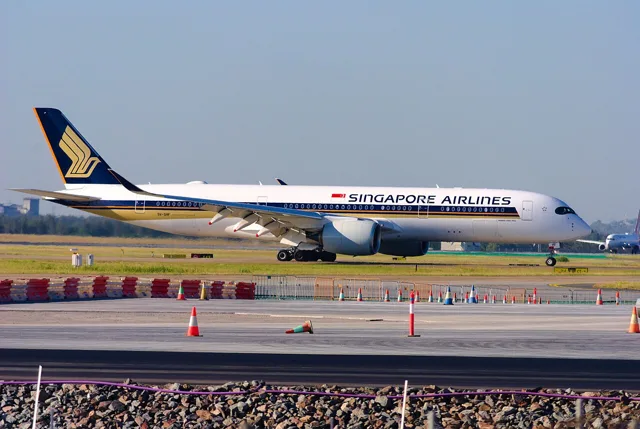
Airbus's carbon-composite long-haul twin, known by its black cockpit mask and curling wingtips, seen at Dublin on routes from Abu Dhabi and Shanghai.
Julian Herzog (Website) · CC BY 4.0
A388
Airbus A380
The double-decker superjumbo: four engines, two full passenger decks, 251 built, and a surprising number of Irish walk-on parts.
Airbus Helicopters
EC45
Airbus H145 and EC145
Spot the H145, understand its shared EC45 code, and distinguish visible equipment from the helicopter's actual mission.
Look for: Modern H145 has a shrouded Fenestron tail rotor; earlier EC145 C-2 has an exposed rotor. Recognition clues
ATR
AT43 · AT44 · AT45 · AT46
ATR 42
ATR's first turboprop: high wing, T-tail and two propellers. Shorter than the ATR 72, with six passenger windows behind the wing, not ten.
Look for: Mounted on top of the fuselage Recognition clues
AT72 · AT73 · AT75 · AT76
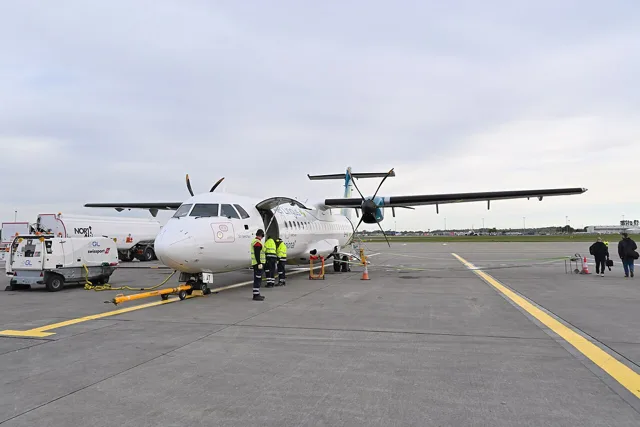
ATR 72
The Franco-Italian turboprop behind Aer Lingus Regional: high wing, T-tail, two propellers and up to 78 seats on short hops across the Irish Sea.
Boeing
PlanespottingMayhemYT · CC BY-SA 4.0
B38M · B39M · B37M · B3XM
Boeing 737 MAX
The re-engined 737: grounded after two fatal crashes, returned to service in 2020, and now Ryanair's newest jet. What changed and how to spot one.
Look for: Engines are wider and sit further ahead of the wing than on a Next Generation 737. Recognition clues
B738 · B737 · B739 · B736
Boeing 737-800
The stretched 737 of the Next Generation family and the backbone of Ryanair's fleet. Where it came from and how to tell it from a MAX or an A320.
Look for: The flattened underside of the intake helps distinguish this 737 generation from an A320. Recognition clues
Julian Herzog (Website) · CC BY 4.0
B741 · B742 · B743 · B744 · B748 · B74S
Boeing 747
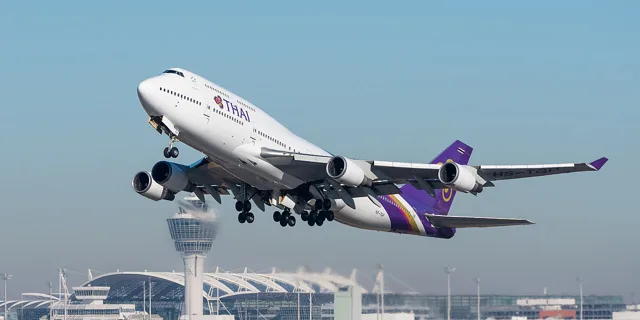
The original jumbo jet: four engines, the famous hump, 1,574 built over five decades, and now mostly a freighter.
B752 · B753
Boeing 757
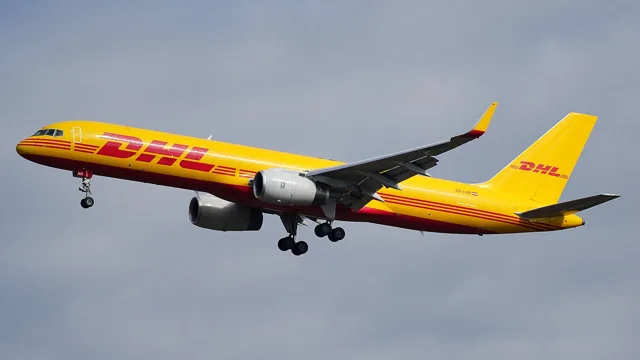
Boeing's long, slim single-aisle twin, built until 2004 and scheduled by United to Dublin and Shannon in 2026. Where it came from and how to spot one.
Adrian Pingstone · Public domain
B762 · B763 · B764
Boeing 767
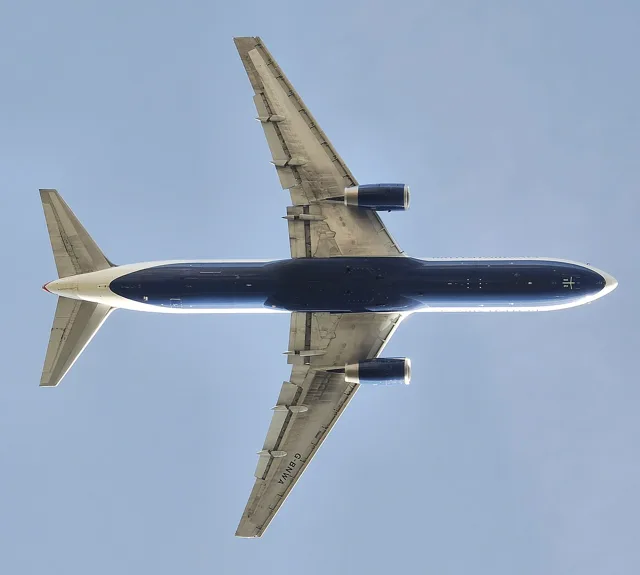
The twin-aisle Boeing that opened the Atlantic to twin-engine jets, still flying as airliner, freighter and tanker, and how to tell it from its neighbours.
B772 · B77L · B773 · B77W · B778 · B779
Boeing 777
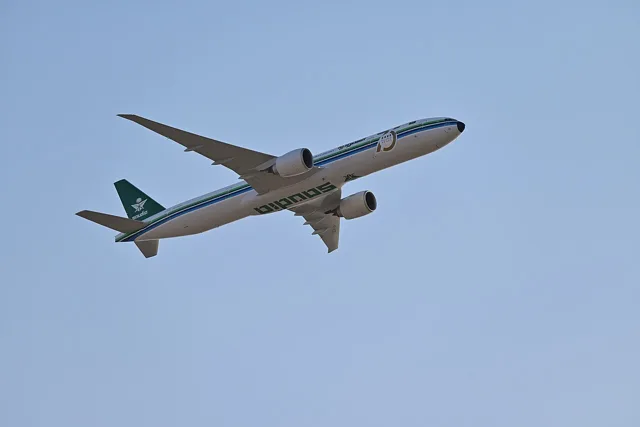
Boeing's big twin, from the first digitally designed airliner to the folding-winged 777X, and how to spot one by its six-wheel bogies and blade tail.
Look for: Six wheels on each main gear leg; use another cue too because an A350-1000 also has six. Recognition clues
Julian Herzog (Website) · CC BY 4.0
B788 · B789 · B78X
Boeing 787 Dreamliner
Boeing's mostly composite long-haul twin: its late start, its three sizes, and how to pick one out by its nose, wingtips and saw-toothed engines.
Look for: Four cockpit windows, compared with six on the 767, 777 and A350. Recognition clues
Bombardier
CRJ1 · CRJ2 · CRJ7 · CRJ9 · CRJX
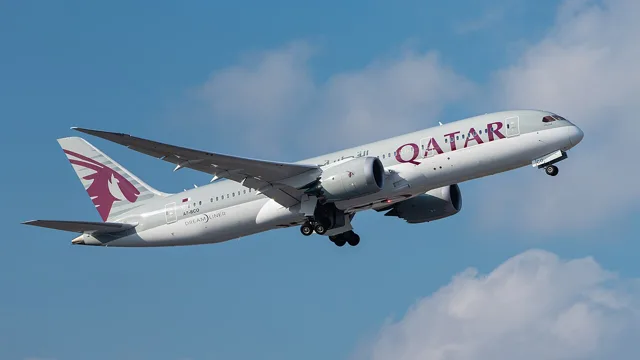
Bombardier CRJ
Canada's T-tailed regional jet family, grown from the Challenger business jet: 50 to 100 seats, and 1,945 built before the line closed in 2021.
Look for: T-tail, with the tailplane on top of the fin (CRJ700) Recognition clues
Cessna
C172
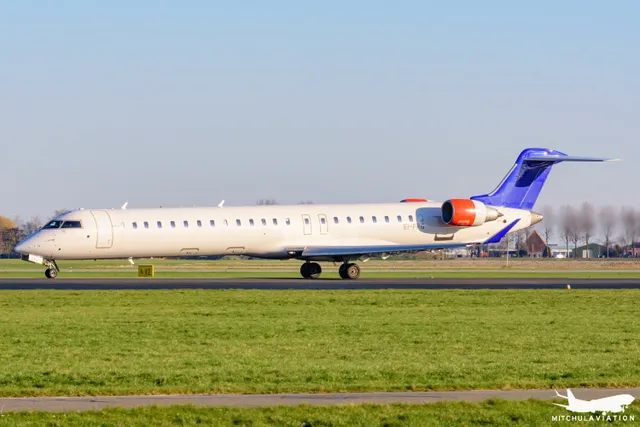
Cessna 172 Skyhawk
Recognise the Cessna 172 from your garden, understand its repeated circuits, and learn why a small propeller aircraft may disappear from tracking.
Look for: Above the cabin, supported by diagonal struts Recognition clues
De Havilland Canada
DH8A · DH8B · DH8C · DH8D
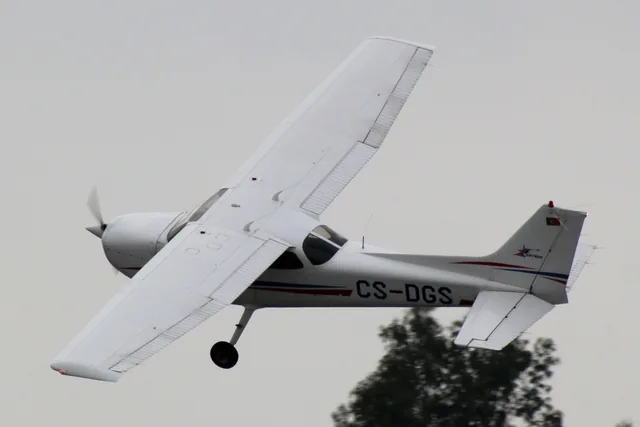
De Havilland Canada Dash 8
The Canadian twin turboprop that became the quiet Q400: four sizes since 1983, from 37 seats to 90, and long nacelles that swallow the main wheels.
Look for: Two turboprops; the Q400 turns six-blade propellers, the Q300 four-blade ones Recognition clues
Embraer
E170 · E75L · E75S · E190 · E195 · E290 · E295
Embraer E-Jets
Brazil's family of regional jets, from the 70-seat E170 to the 146-seat E195-E2, with four-abreast cabins and no middle seats.
E135 · E145 · E45X
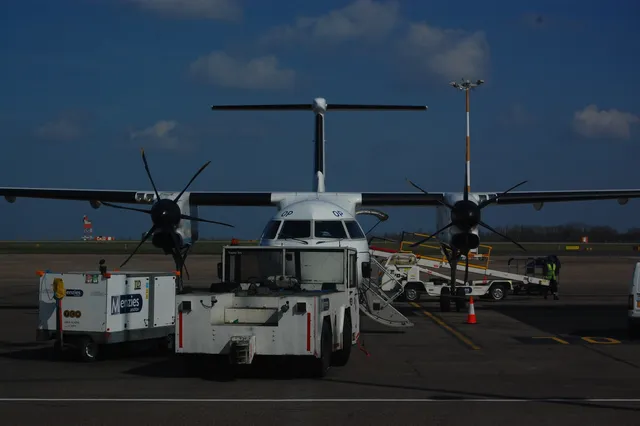
Embraer ERJ 145 family
Brazil's 37 to 50 seat regional jet family, grown from the Brasilia turboprop: two engines at the tail, a T-tail and a long pointed nose.
Look for: Two jet engines on the rear fuselage, below a T-tail, with a low wing Recognition clues

Leonardo
A139
Leonardo AW139
Recognise the AW139, learn its Irish Air Corps roles, and avoid mistaking its equipment or flight path for a confirmed mission.
Look for: Five blades; a clear still image is more useful than a blurred rotor disc. Recognition clues
Pilatus
PC12
Pilatus PC-12
Identify the PC-12 by its single nose propeller and T-tail, separate it from smaller turboprops, and understand what its track cannot reveal.
Look for: One nose-mounted propeller, with no engines on the wings Recognition clues


How to tell them apart
Airbus A220 or Embraer E-Jets
Airbus A220 vs Embraer E-Jet: how to tell them apart
Two small twinjets with an engine under each wing, often mixed up. How to tell an Airbus A220 from an Embraer E-Jet by its wingtips, windows and cabin, sourced.
Airbus A320 or Boeing 737-800
Airbus A320 vs Boeing 737: how to tell them apart
The Airbus A320 and the Boeing 737 are easy to confuse. How to tell them apart from the ground by nose, engines, wingtips, wheels and sound, with sources.
PlanespottingMayhemYT · CC BY-SA 4.0
Boeing 737 MAX or Boeing 737-800
Boeing 737 MAX vs 737-800: how to tell them apart
The 737 MAX shares its fuselage with the 737-800, so look at the engines, wingtips, tail cone and nose gear. A spotter's guide to the difference, with sources.
Airline fleets
6 types listed
Aer Lingus fleet: the aircraft Ireland's flag carrier flies
Aer Lingus flies Airbus jets: the A320 and A320neo in Europe, the A321LR, A321XLR and A330 across the Atlantic, plus ATRs for Aer Lingus Regional. Sourced.
4 types listed
Ryanair fleet: what planes does Ryanair fly?
Ryanair flies Boeing 737s: the 737-800 and the 737 MAX it calls the Gamechanger, plus a few Airbus A320s. The fleet by type, with seats and orders, sourced.