



Key facts
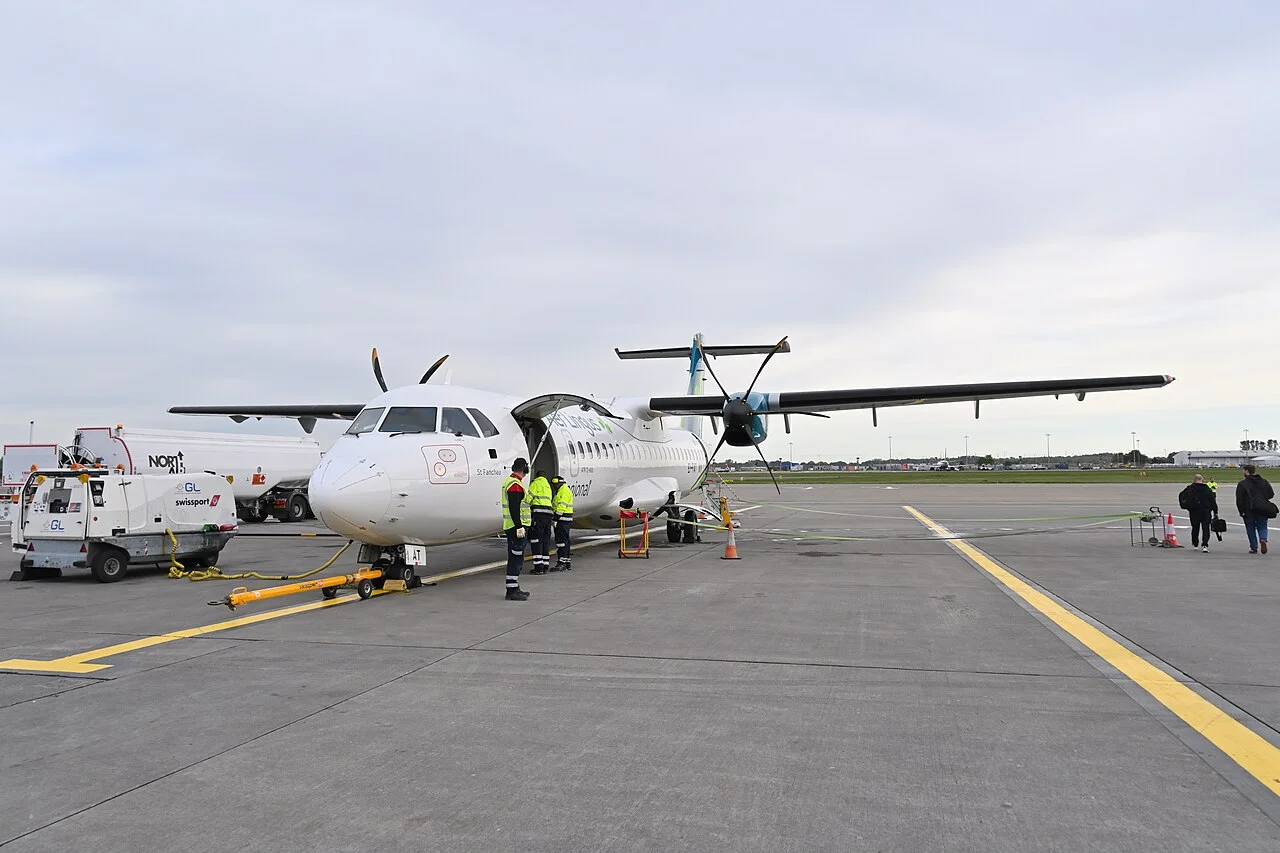
Look up at a small airliner with its wing on top and a propeller on each side, and it may well be an ATR 72. It is the aircraft behind Aer Lingus Regional's short hops between Ireland and Britain [13], and a reminder that propellers never went out of fashion.
A European partnership
ATR began on 4 November 1981 as a joint venture between Aérospatiale of France and Aeritalia of Italy, the companies that later became part of Airbus and Leonardo [3]. The partners' first aircraft, the ATR 42, flew on 16 August 1984 [3].
The ATR 72 is the stretched sibling. Its fuselage is 4.5 m longer than the 42's [2]. The prototype first flew on 27 October 1988, French airworthiness certification followed on 25 September 1989, and Finnair put the type into service on 27 October 1989, exactly a year after that first flight [2]. Leonardo still builds the fuselages and tail parts in Italy [3].
One name, several generations
The ATR 72 has been refined in steps rather than replaced. Europe's type certificate noise data sheet lists the early 72-201 and 72-202 on Pratt & Whitney Canada PW124B engines, the 72-211 and 72-212 on the more powerful PW127 family, and the 72-212A on the PW127F or PW127M [4]. The 72-212A is the aircraft sold first as the 72-500 and later as the 72-600 [1].
The air traffic system tracks these as four type designators [1]:
- AT72: the ATR 72-201 and 72-202.
- AT73: the ATR 72-211 and 72-212.
- AT75: the ATR 72-212A in its 500 form, listed as the ATR 72-500.
- AT76: the ATR 72-212A in its 600 form, the ATR 72-600.
The current model, the 72-600, reached its first customer when Royal Air Maroc took two aircraft in August 2011 [5]. It brought a glass cockpit with five screens, Thales avionics with a new flight management system, a cabin designed by Giugiaro and PW127M engines with 2,750 horsepower available for take-off [5]. ATR quotes a typical layout of 72 seats at a 29 inch pitch, or up to 78 at 28 inches, and a range of 1,370 km with a full cabin [6].
ATR is not shy about fuel. It calls the 72-600 the most fuel-efficient regional aircraft and says competing regional jets cost at least 45% more to operate [6]. That is the manufacturer's claim rather than an independent test, but it explains why the type keeps selling. ATR delivered 32 aircraft in 2025, took 50 net orders, and said in February 2026 that its aircraft were flown by some 200 airlines in more than 100 countries [7].
Over Ireland
The ATR 72 you are most likely to see here wears Aer Lingus colours. Aer Lingus Regional is a franchise, and since 2022 its flights have been operated by Emerald Airlines, a Dublin-based airline that flies the ATR 72-600 [11] [13]. Emerald was confirmed as the operator in August 2021 after the previous franchise holder, Stobart Air, stopped flying in June of that year [10]. Its chief executive, Conor McCarthy, said the routes were "more suited to 70-seat aircraft like the ATR72s that we will be using" [10].
Emerald's first Aer Lingus Regional flight was Dublin to Donegal on 26 February 2022, a State-funded public service route [11]. By June 2022 it had 13 aircraft, bases at Dublin and Belfast City, and 18 routes from 14 airports, including Bristol, Birmingham, Exeter, Edinburgh, Newcastle, the Isle of Man and Newquay [12]. Emerald describes the network as connecting the island of Ireland with the UK regions and the Channel Islands [13]. Fleet and route numbers change with the seasons, so treat those as a snapshot.
How to spot one
From the ground, three things together say ATR: the wing is mounted on top of the fuselage, the tailplane sits on top of the fin in a T-tail, and each engine turns a propeller [9]. The 72-600's propellers have six blades [9]. The fuselage is long and slim and sits low to the ground on short landing gear [9].
ATR 72 or ATR 42? They look almost identical, because the only external difference is size [8]. Count the passenger windows behind the wing: the ATR 42 has six on each side, the ATR 72 has ten [8]. If the aircraft looks stubby, it is probably a 42.
ATR or Dash 8 Q400? The De Havilland Canada Dash 8 is the other common regional turboprop, and the quickest tell is the wheels. The ATR's main landing gear folds into blister fairings on the lower fuselage, leaving short engine nacelles [9]. The Dash 8's gear sticks out from under the wings and retracts into long nacelles [8] [9]. Close up, the ATR has six cockpit windows where a Bombardier-built Dash 8 has four [8]. The Q400 also carries a small bullet-shaped fairing on its tail [8].
ATR or a regional jet? If there are no propellers and the engines hang under a low wing, you are looking at a jet doing a similar job, such as an Embraer E-Jet or an Airbus A220.
From the archive
An ATR can power its cabin on the ground with the right engine running and its propeller held still by a brake. ATR calls this hotel mode. [14]
ATR says the 72 introduced a carbon-fibre outer wing box to civil aircraft in 1988, making this apparently traditional turboprop an early adopter of composite structure. [14]
In photographs
Look closer at the shapes, details and liveries. Every photograph links to its original and credits its creator.
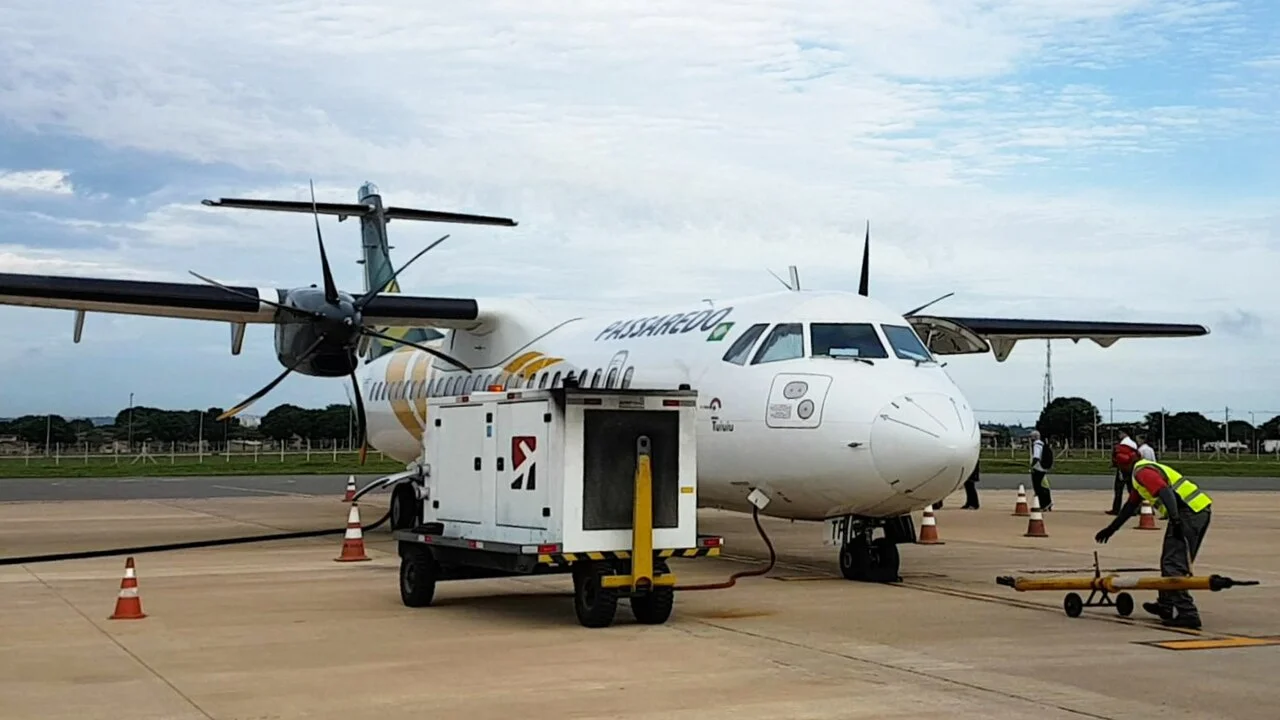
A Passaredo ATR 72 on the ground, with its high wing and propellers visible.
Contraexemplo · CC BY-SA 4.0 · Source and credits · 2018-10-24

View full-size · Original imageResized WebP display copy.

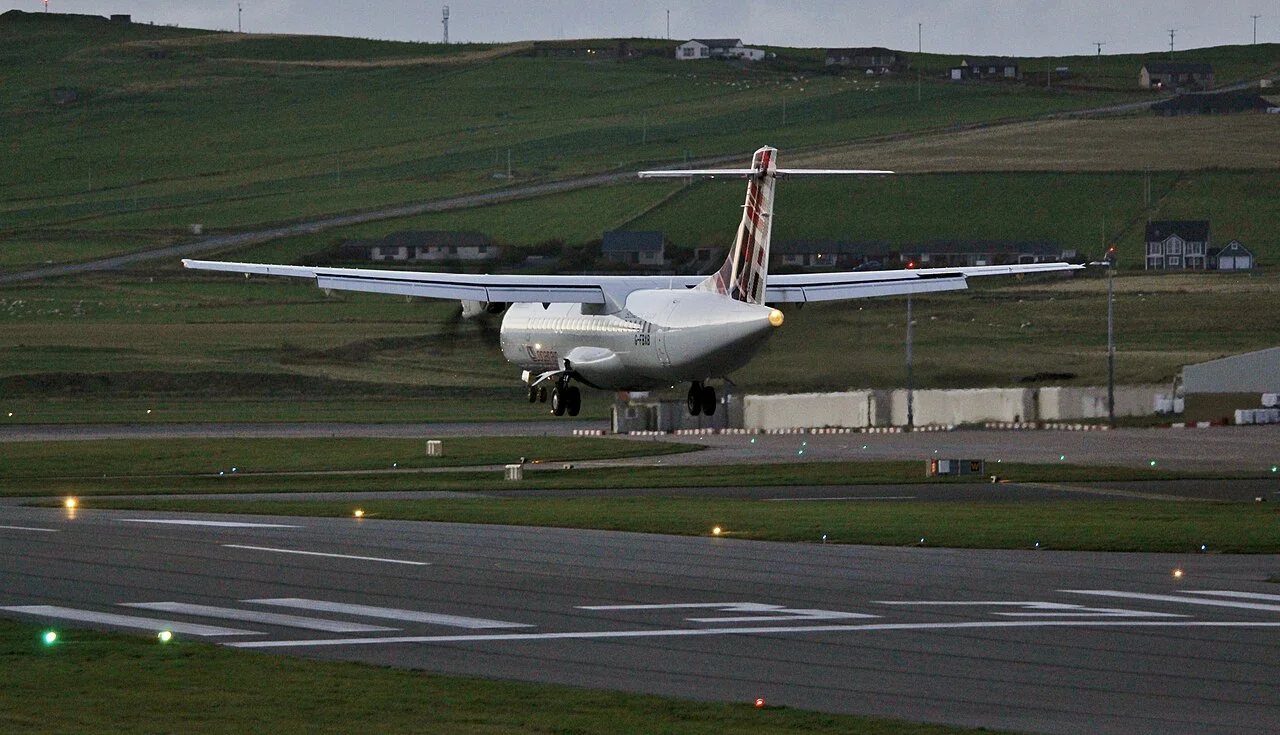
ATR 72 G-FBXB on approach.
Ronnie Robertson · CC BY-SA 2.0 · Source and credits · 2020-09-25 19:10:54

View full-size · Original imageResized WebP display copy.

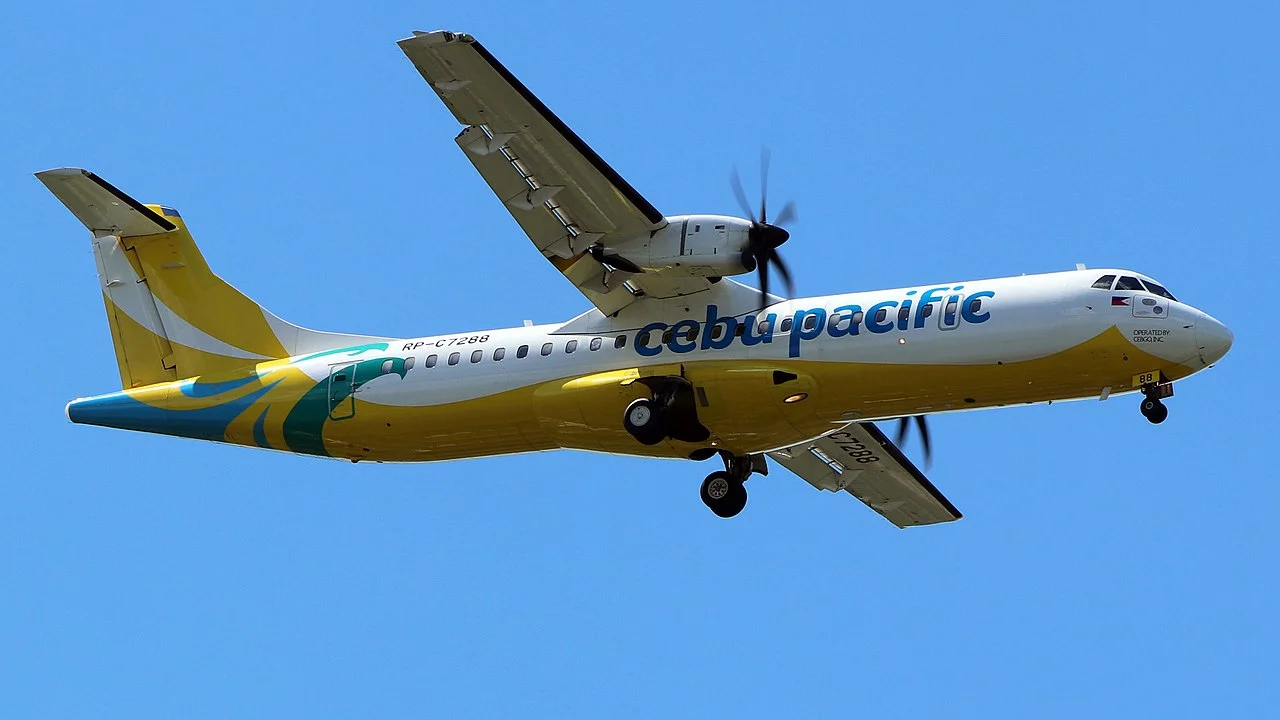
A Cebgo ATR 72-600 in flight.
Hetzark Segundo RPLL · CC BY-SA 4.0 · Source and credits · 2021-06-19 09:41:15

View full-size · Original imageResized WebP display copy.

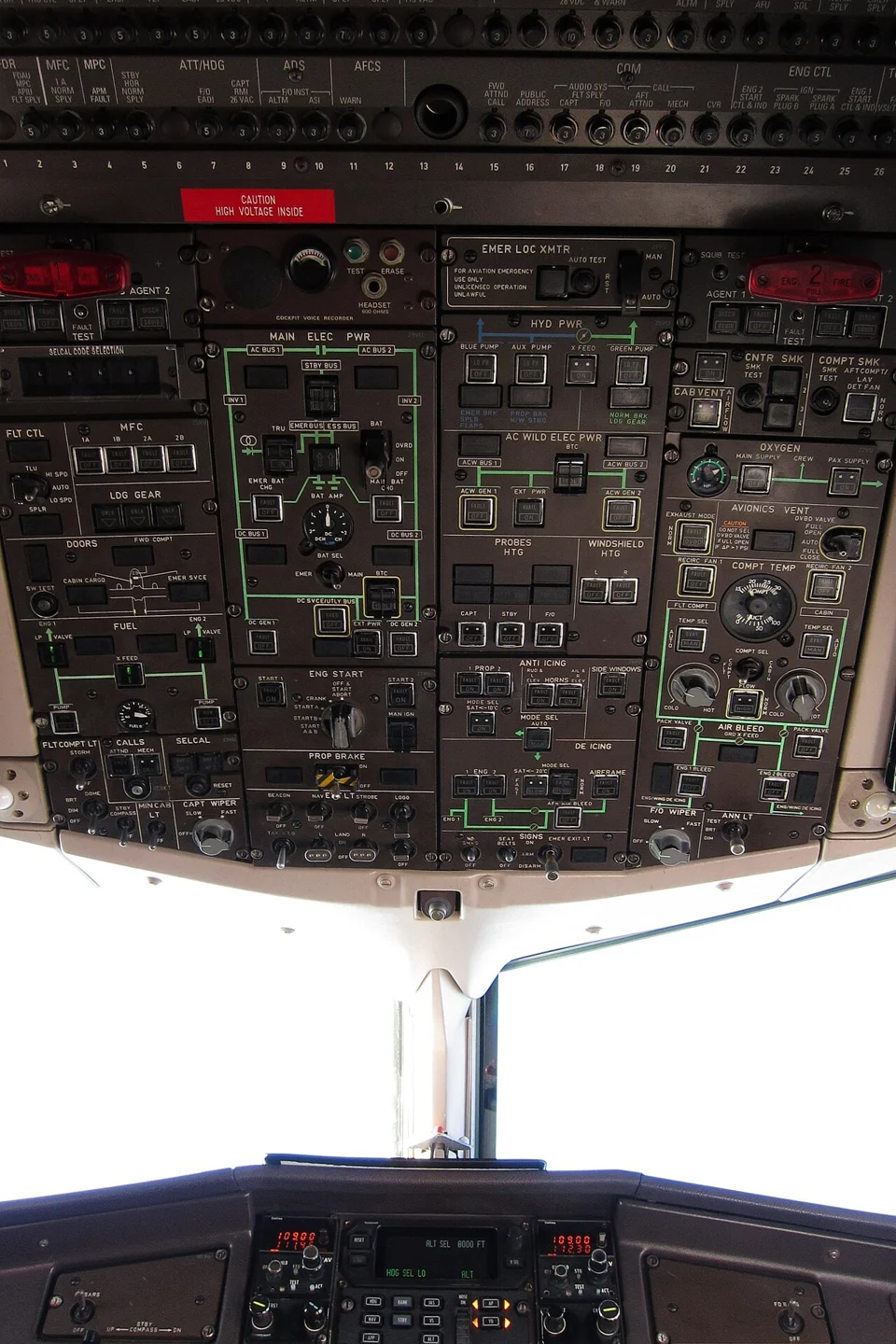
A close-up of the overhead panel in an ATR 72 cockpit.
Olivier Cleynen · CC BY-SA 3.0 · Source and credits · 2013-02

View full-size · Original imageResized WebP display copy.

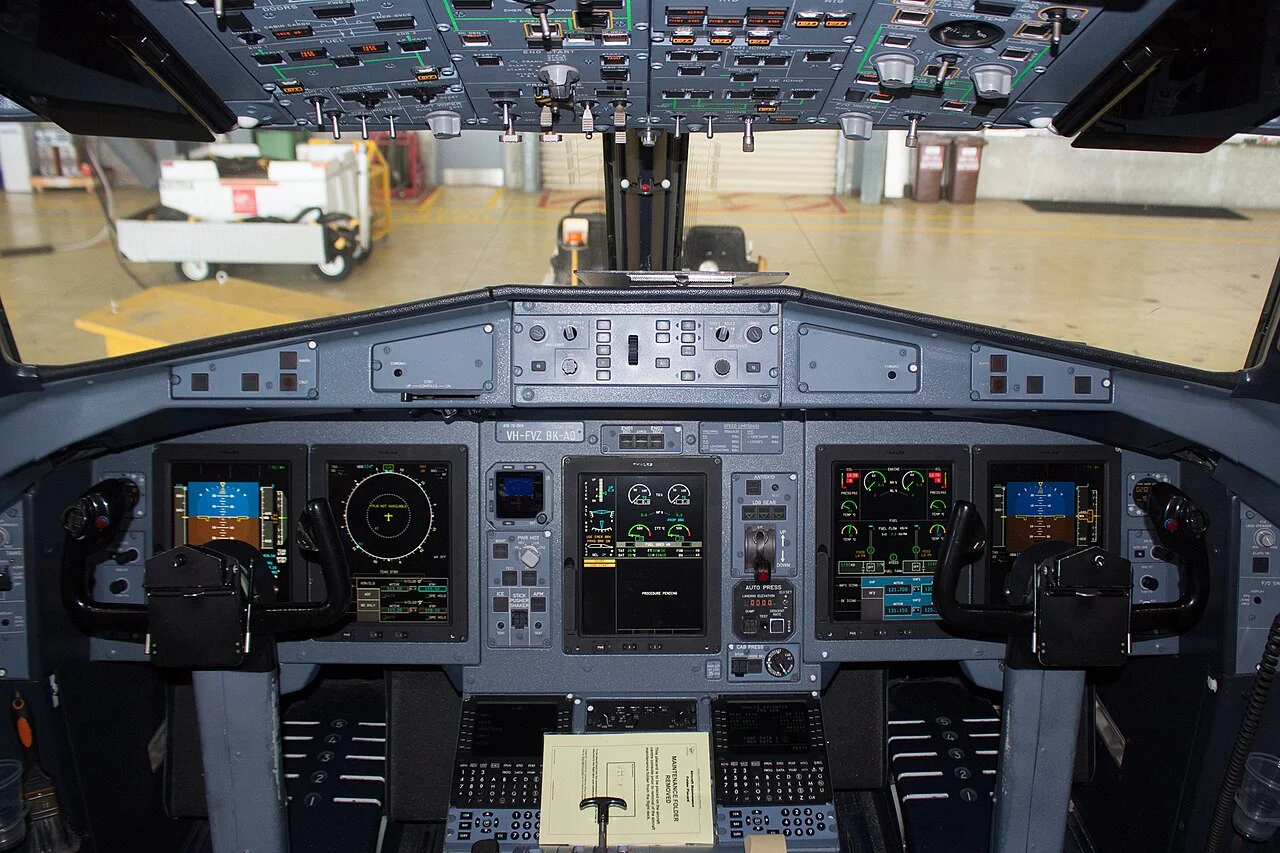
Inside a real Virgin Australia ATR cockpit at Brisbane.
Aviationbystirling · CC BY 4.0 · Source and credits · 2016-11-17 12:10:43

View full-size · Original imageResized WebP display copy.

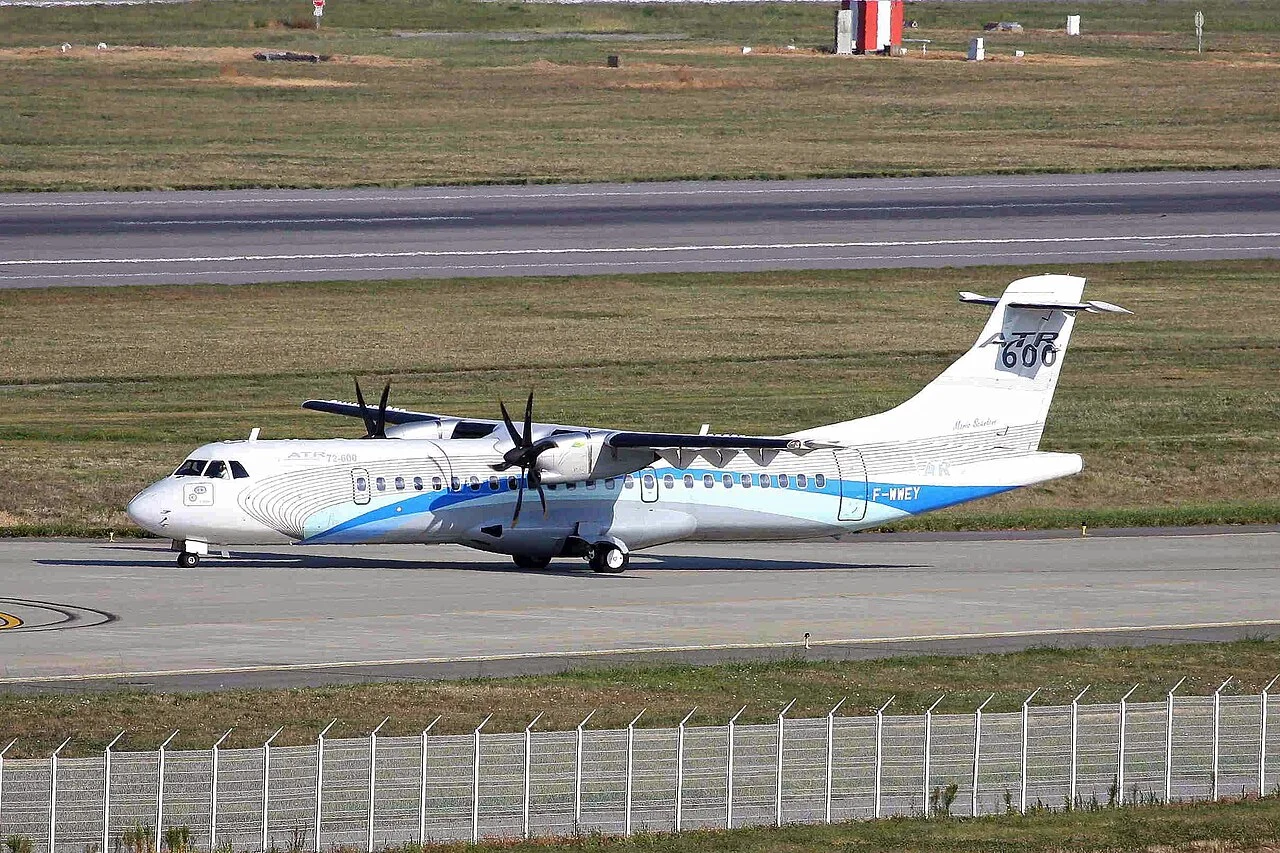
ATR 72-600 prototype F-WWEY at Toulouse in September 2011.
Ken Fielding · CC BY-SA 3.0 · Source and credits · 2011-09-01 16:06:37

View full-size · Original imageResized WebP display copy.

Drawings and original documents
Existing published drawings are credited below. These are reference illustrations, not manufacturing blueprints.
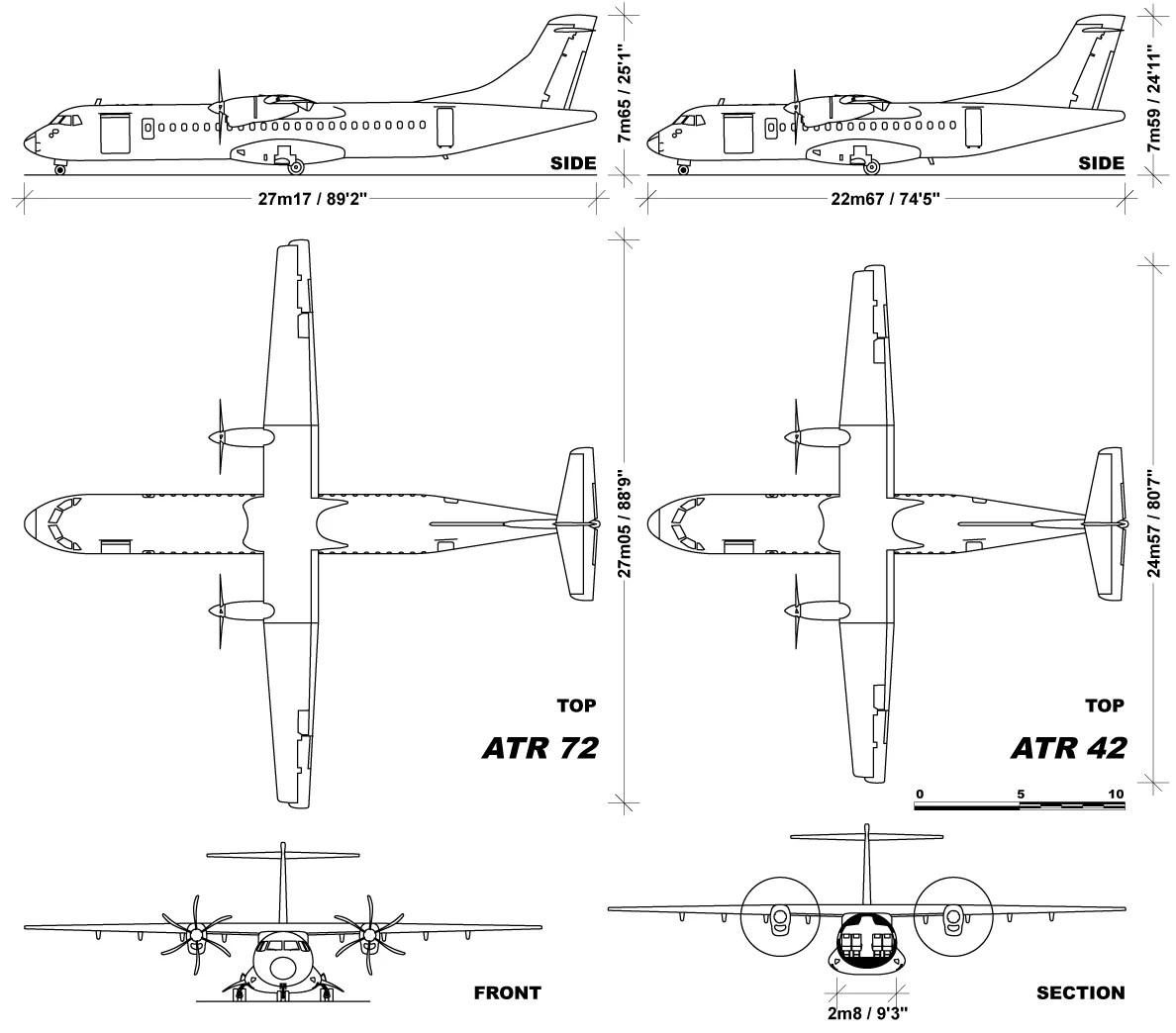
Julien Scavini’s published family drawing compares the ATR 42 and longer ATR 72. This is a reference drawing, not a factory blueprint.
Julien.scavini · CC BY-SA 3.0 · Source and credits · 2012-04-25

View full-size · Original imageResized WebP display copy.

- ATR 72-600 manufacturer brochure
ATR’s official product sheet includes a 72-seat cabin plan and a dimensioned cabin cross-section on page 2, alongside aircraft dimensions, engine information and performance assumptions.
- ATR’s history of innovation
The manufacturer’s illustrated retrospective explains the high wing, propeller technology, carbon-fibre structure and propeller-brake hotel mode.
See one for yourself
Skylark shows what is flying over Ireland right now, and the iPhone app points you at it. Next time you hear engines, look for the AT72 or AT73 or AT75 or AT76 code.
Sources
Facts checked against these sources on 28 September 2026. Numbers that change over time, such as orders and fleet sizes, are as of the date given beside them.
- Order JO 7360.1G, Aircraft Type DesignatorsFederal Aviation Administration
- 10/27/1988: ATR 72 prototype takes to the skiesAirways Magazine
- ATR turns 40Leonardo
- Type certificate data sheet for noise EASA.A.084, ATR 42 and ATR 72, issue 7EASA
- ATR delivers its first ATR 72-600sATR
- ATR 72-600ATR
- ATR reports strong 2025 demand, prepares 2026 ramp-upATR
- Spotting the difference: regional aircraftFlightradar24
- ATR 72-600: specs, history and live trackingAviation Geeks
- Emerald Airlines confirmed as new Aer Lingus regional operatorThe Irish Times
- Emerald flies first Aer Lingus Regional routeThe Irish Times
- Emerald Airlines welcomes its 6th ATR 72-600 from Nordic Aviation Capital, bringing its current fleet to a total of 13 aircraftEmerald Airlines
- Our servicesEmerald Airlines
- A History of InnovationATR
How often does Skylark see it?
Read the existing Ireland observation log to see the days each type appeared. This is what Skylark recorded, with the coverage its receivers and providers supplied; it is not a census of Irish aircraft or a prediction of your next sighting.
One aircraft seen on three different days contributes three airframe-days. Repeated reports on the same day count once. Codes are shown separately, without adding them into a family total. A logged day does not mean continuous coverage throughout that day.
Observations load when you request them.