

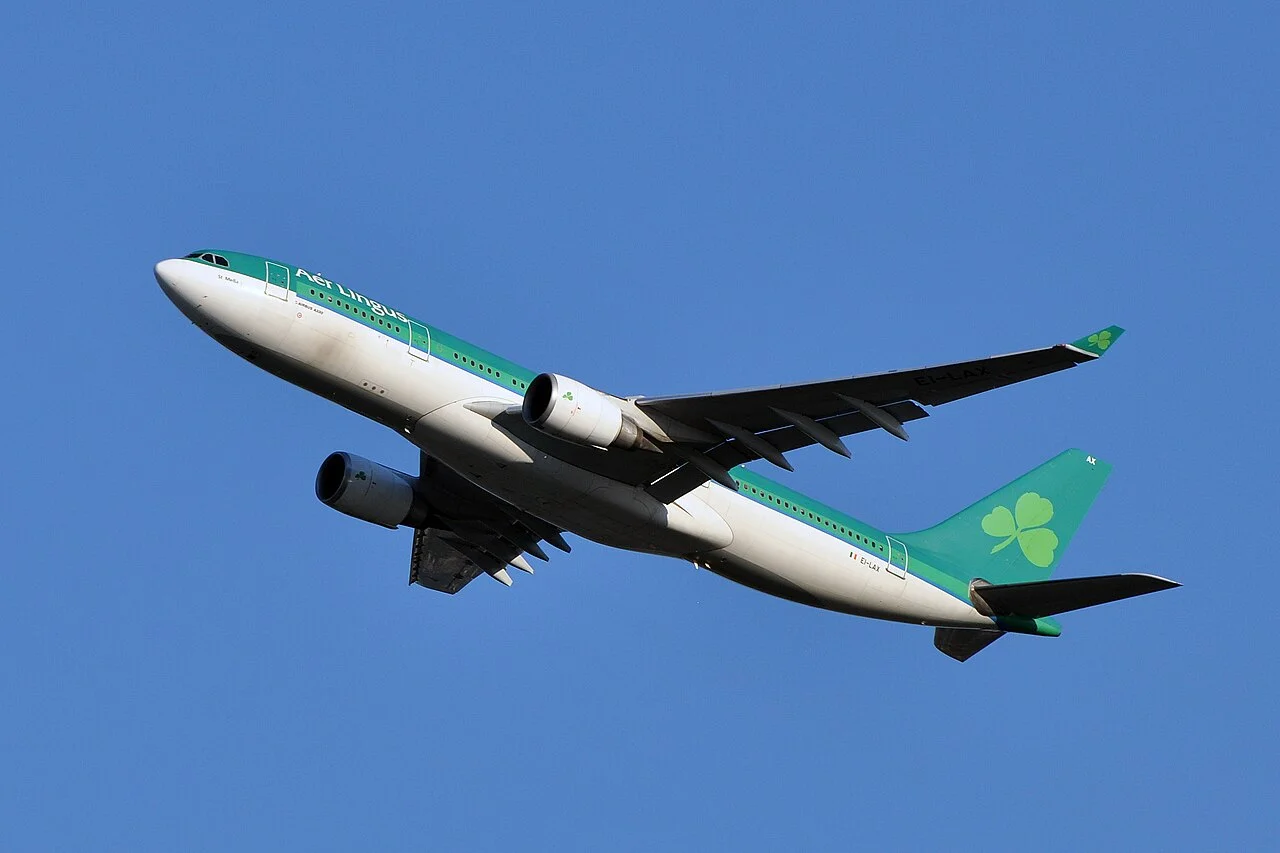


Key facts
The A330 is the big Airbus twin that carries Aer Lingus passengers from Dublin to North America [5]. It has also sold in great numbers everywhere else: 1,623 had been delivered to more than 145 operators by December 2024 [2], and 1,672 by the end of August 2026 [10]. Look up at a two-engined widebody over Kildare and this is one of the first types worth guessing.
Twins with a four-engined sibling
Airbus launched the A330 and the four-engined A340 together in June 1987 [3]. The A330 shares its airframe with the early A340s, and both have fly-by-wire controls and a comparable glass cockpit [3]. The A330 took the twin-engined half of the job.
The first A330 flew on 2 November 1992 and stayed up for 5 hours and 15 minutes [3]. European certification of the A330-301 followed on 21 October 1993 [1], and the French domestic airline Air Inter put the type into service in 1994 [2].
The -300 is the long one, at 63.66 m [1]. Airbus launched the shorter -200 in 1996, and it entered service in 1998 [2]. It measures 58.82 m from nose to tail [1]. Both have a 60.30 m wing [1]. Airlines could pick from three engine makers: General Electric's CF6-80E1, Pratt & Whitney's PW4000 series or the Rolls-Royce Trent 700 [1]. A freighter, the A330-243F, was certified in April 2010 [1], and the A330 MRTT tanker can carry 111 tonnes of fuel for other aircraft [2].
The A330neo
In 2014 Airbus launched a re-engined version, the A330neo [2]. It swaps the engine choice for a single new one, the Rolls-Royce Trent 7000, and stretches the wing to 64 m [2]. There are two sizes: the A330-800, which seats 220 to 260 in a typical layout, and the longer A330-900, which seats 260 to 300 [2].
The A330-900 first flew on 19 October 2017, won European certification on 26 September 2018 and went to its first customer, TAP Air Portugal, on 26 November 2018 [2]. The smaller A330-800 first flew on 6 November 2018 and was certified in February 2020, with Kuwait Airways its first operator [2]. On an ADS-B receiver the -800 appears as A338 and the -900 as A339; the original -200 and -300 are A332 and A333.
The BelugaXL
The strangest A330 of all does not carry passengers. The BelugaXL is built on an A330-200 Freighter [6], with the flight deck moved down into a lowered nose and a vast unpressurised cargo hold on top [1]. Its official type is the A330-743L, certified by EASA on 11 November 2019 [1], and its ICAO type designator is A337 [7].
The first BelugaXL flew for 4 hours and 11 minutes on 19 July 2018 [6]. Airbus planned five, built between 2019 and 2023, to carry large aircraft components, operating from 11 destinations [6]. If you see A337 on the map, it is one of them [7].
How to spot one
- Count the engines. Two engines under the wing means A330. Four means its sibling, the A340, which also carries an extra main landing gear leg in the middle of the fuselage [4].
- Look at the main gear. An A330 has two main landing gear legs, each with four wheels on a bogie that tilts backwards [4]. The A340 has three [3].
- Check the wingtips. The original A330 has short, wide winglets that stand out at roughly 45 degrees [4]. The A330neo's wingtips curve smoothly up from the wing, much like the A350's [4].
- Mind the mask. The A330neo almost always has black paint around its flight deck windows, and its engines look larger in diameter and shorter [4]. That mask is also the Airbus A350's calling card, so on a neo the type code on your receiver is the quickest way to settle it: A339 versus A359.
- Other twins. Against a Boeing 767, a Boeing 787 or a Boeing 777, look first for the A330's short, straight winglet angled out at about 45 degrees [4].
- The BelugaXL needs no help. The cockpit sits low under a bulbous forward hump, a shape the type certificate describes as a lowered nose section with the main deck cargo compartment above [1].
Over Ireland
Aer Lingus is the A330 operator Irish skywatchers see most. In May 2017 it welcomed another A330-300, EI-GAJ Saint Carthage, with 313 seats: 30 in business and 283 in economy [5]. Its first commercial trip was EI 109 from Dublin to New York JFK, and that summer the airline was flying 13 routes between Ireland and North America [5].
Shannon has become a favourite test ground for new versions, thanks to its 3,199 m runway, the longest in Ireland [8]. In April 2019 the BelugaXL arrived from Toulouse for crosswind training and rejected take-offs as part of its certification [9]. In October 2019 an A330-800, F-WWTO, came to Shannon to fly the same kind of tests in the winds of Storm Lorenzo [8].
From the archive
The passenger A330 also became a tanker: Airbus lists 111 tonnes of fuel for the A330 MRTT, whose initials stand for Multi Role Tanker Transport. [11]
Airbus says the A330 and A330neo share 95% commonality in airframe spare parts, linking the newer aircraft to an older industrial family. [11]
In photographs
Look closer at the shapes, details and liveries. Every photograph links to its original and credits its creator.
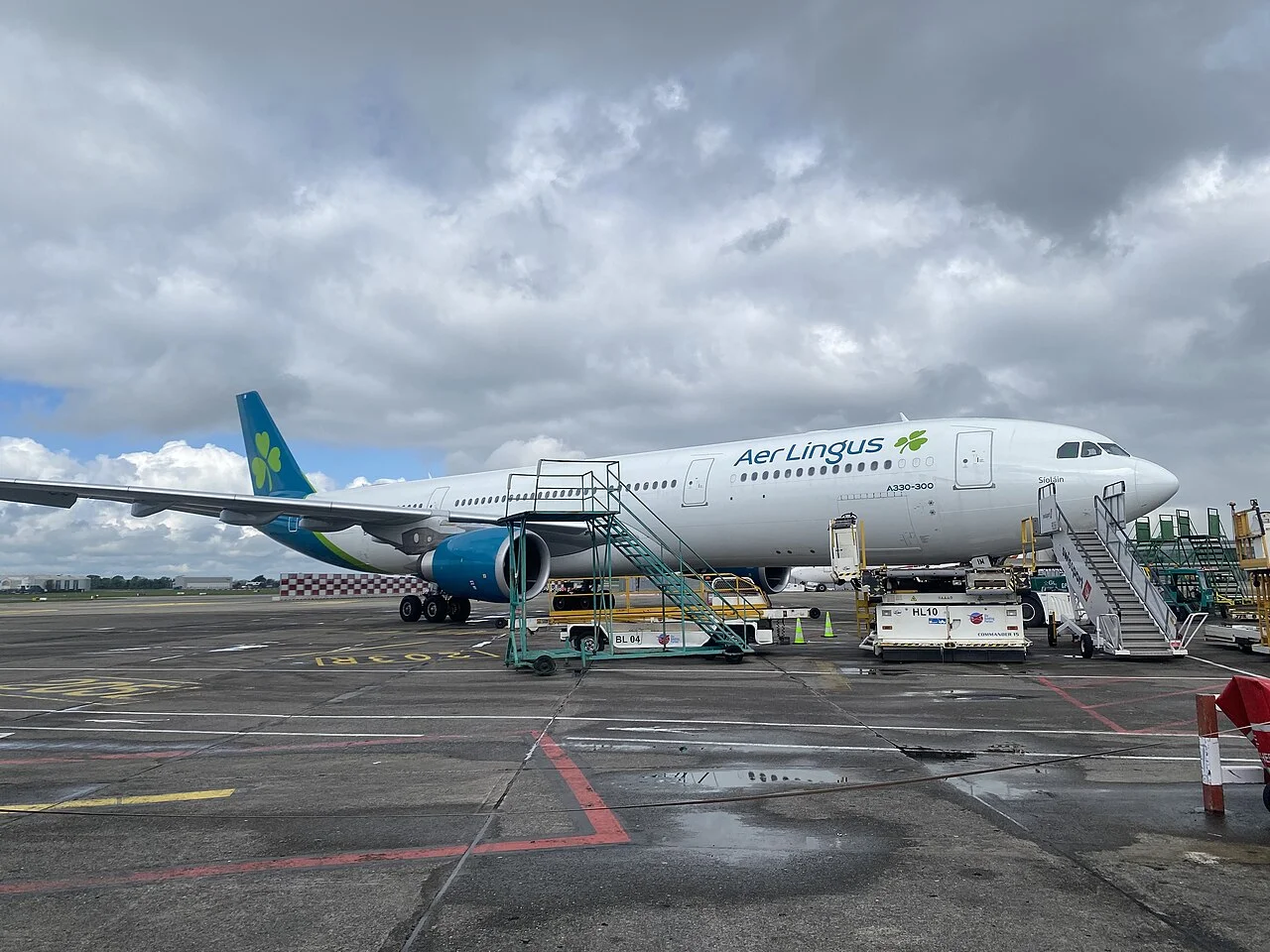
An Aer Lingus A330-300 at Dublin Airport in April 2025.
瑞丽江的河水 · CC BY-SA 4.0 · Source and credits · 2025-04-26 11:22:22

View full-size · Original imageResized WebP display copy.

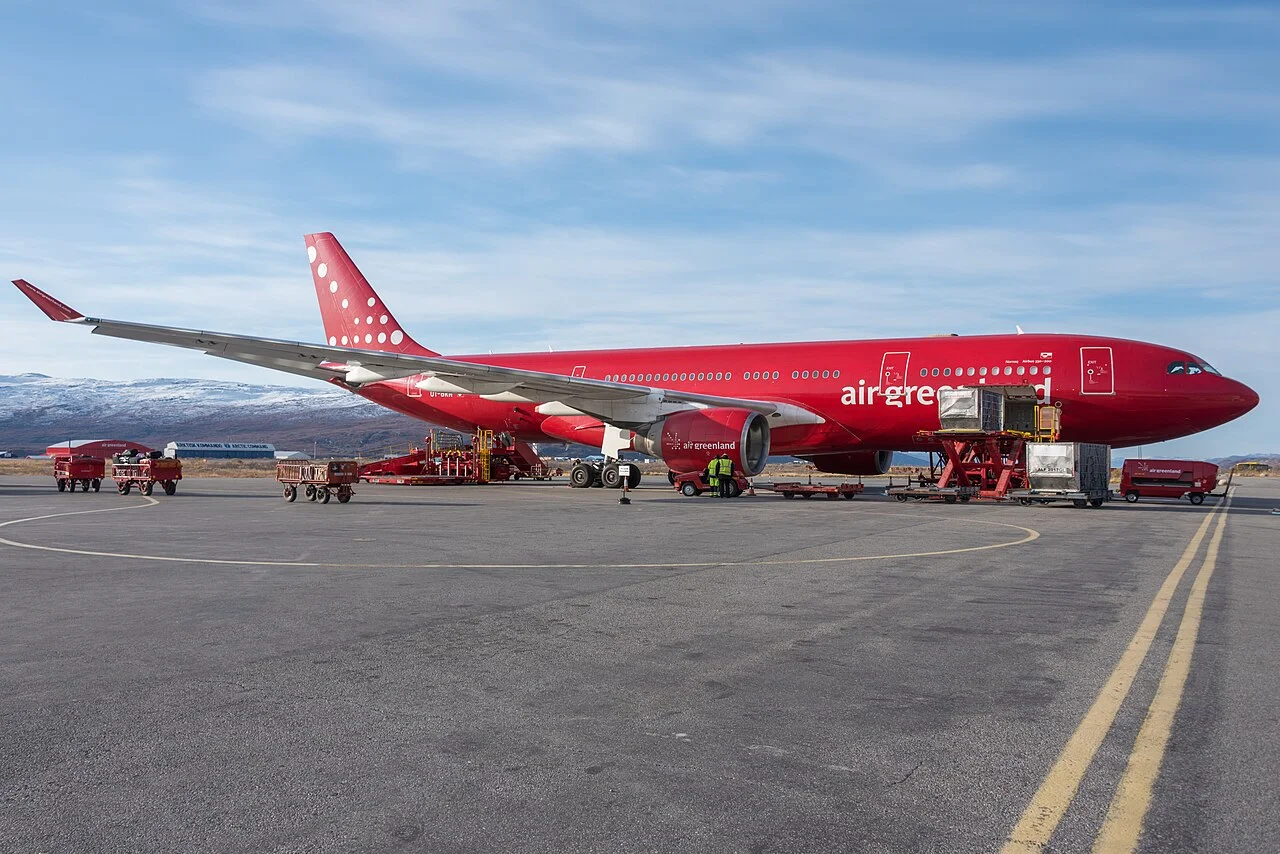
Air Greenland A330-200 OY-GRN at Kangerlussuaq in September 2017.
Gordon Leggett · CC BY-SA 4.0 · Source and credits · 2017-09-20 10:07:27

View full-size · Original imageResized WebP display copy.

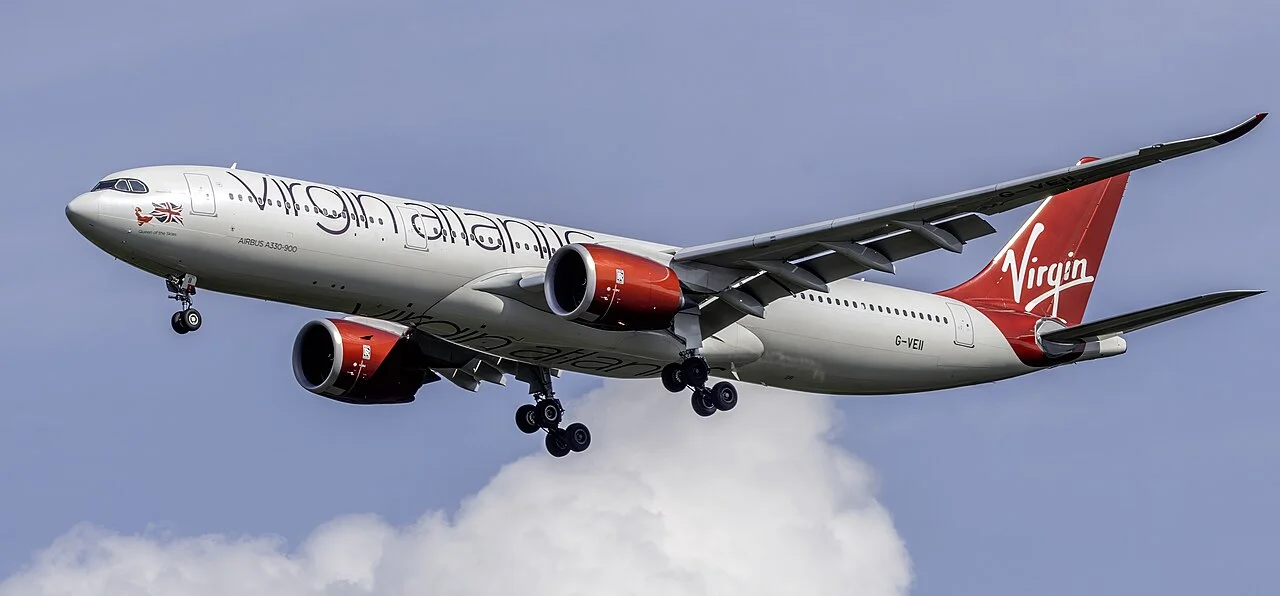
Virgin Atlantic A330-900 G-VEII. This neo-generation example has different engines and wingtips.
Acroterion · CC BY-SA 4.0 · Source and credits · 2025-04-30

View full-size · Original imageResized WebP display copy.

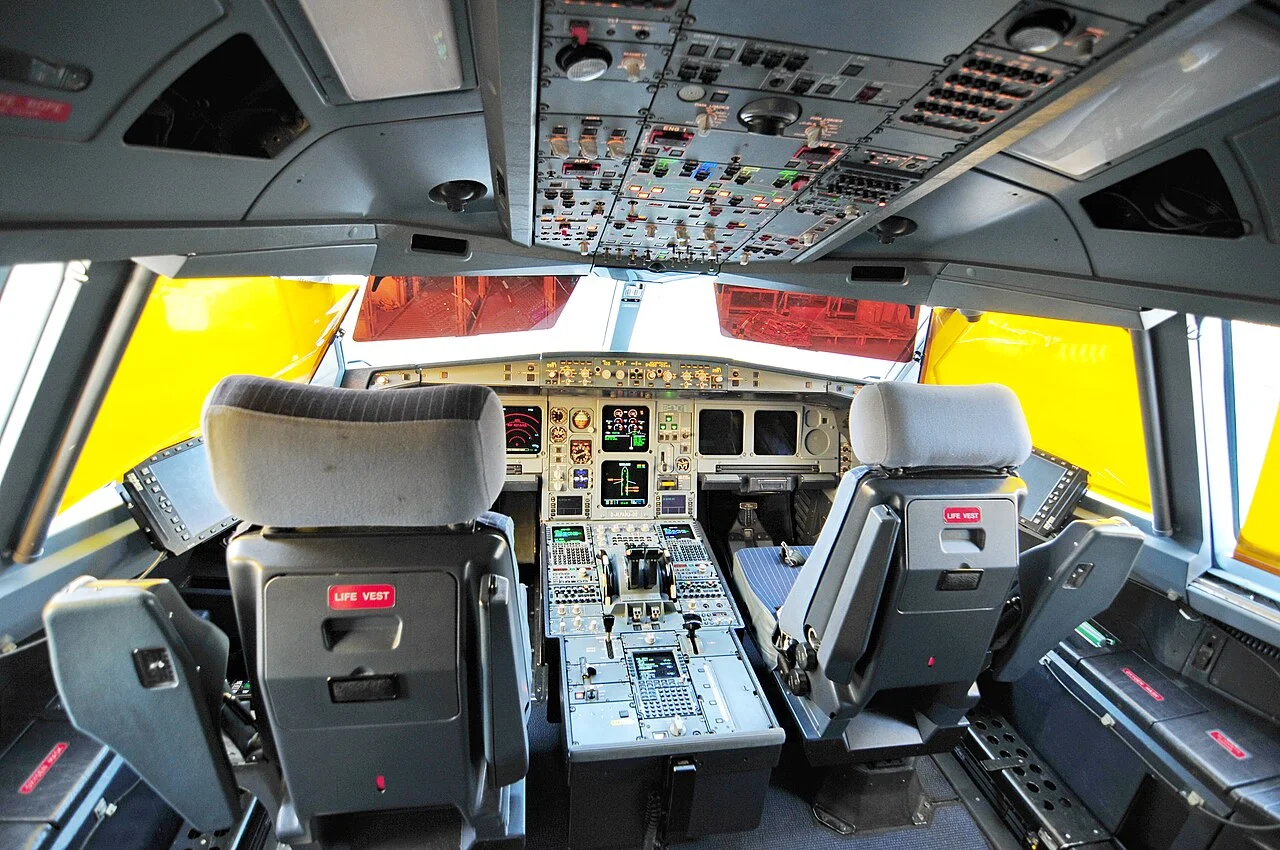
Inside an A330-200 cockpit. Compare the sidesticks and panel layout with the smaller A320.
Ralf Roletschek · CC BY 3.0 · Source and credits · 2013-08-06

View full-size · Original imageResized WebP display copy.

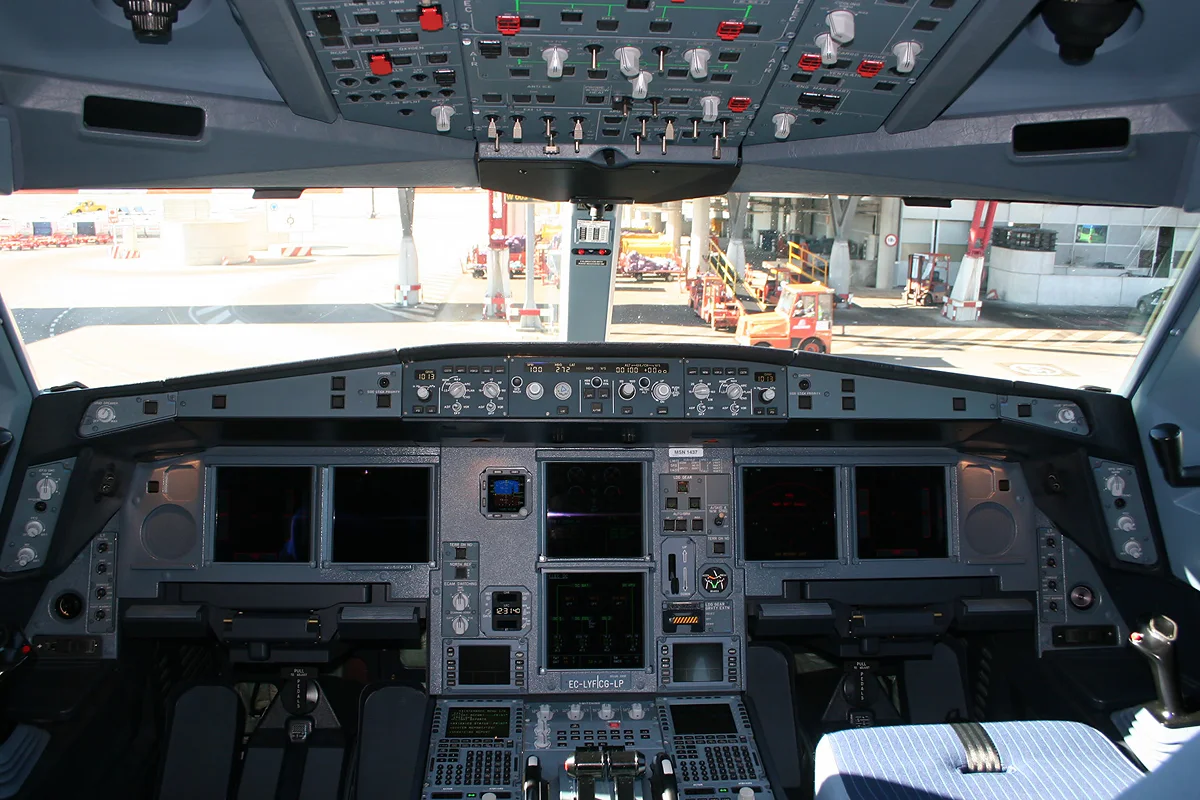
The flight deck of Iberia A330-302 EC-LYF.
Curimedia | P H O T O G R A P H Y · CC BY 2.0 · Source and credits · 2013-11-21 14:41

View full-size · Original imageResized WebP display copy.

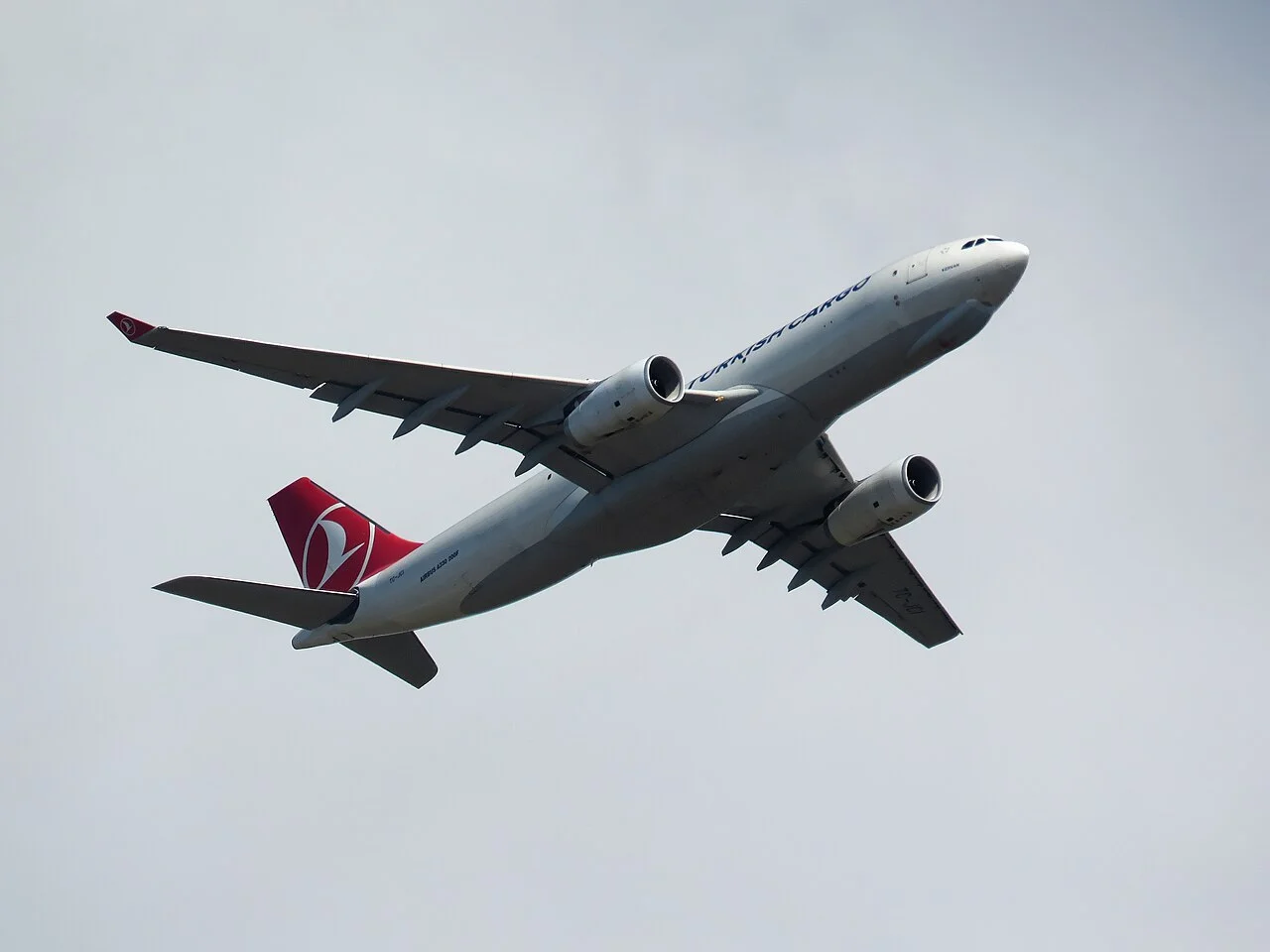
A Turkish Cargo A330 freighter at Stansted, seen from below.
Acabashi · CC BY-SA 4.0 · Source and credits · 2023-08-23 15:17:15

View full-size · Original imageResized WebP display copy.

Drawings and original documents
Existing published drawings are credited below. These are reference illustrations, not manufacturing blueprints.
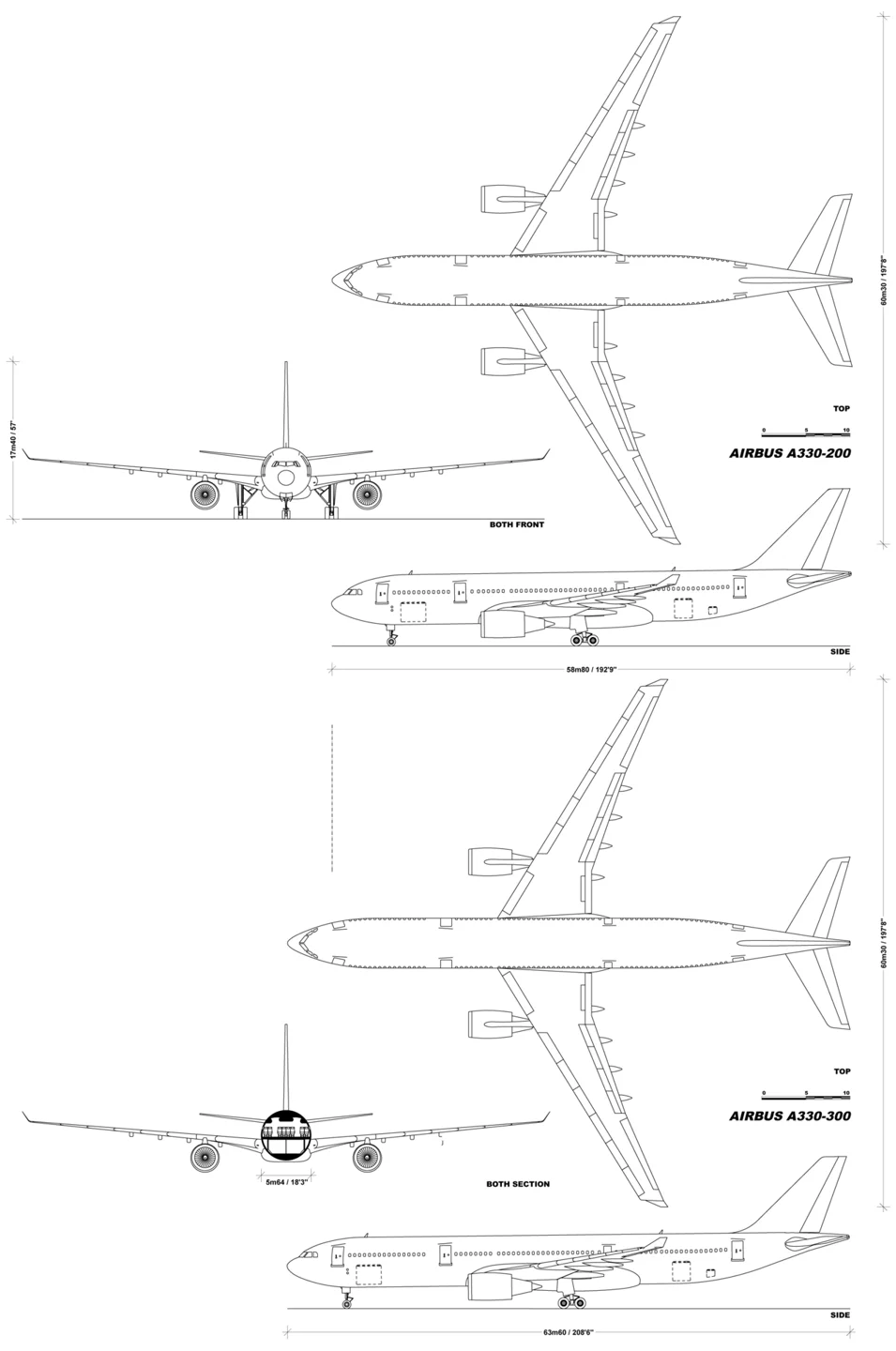
Julien Scavini’s reference drawings compare the A330 family in side, front and overhead views. These are published reference drawings, not factory blueprints.
Julien.scavini · CC BY-SA 3.0 · Source and credits · 2012-08-14

View full-size · Original imageResized WebP display copy.

- A330 airport and maintenance planning drawings, December 2025
Airbus’s technical planning reference brings together dimensions, passenger and cargo arrangements, ground manoeuvring and servicing drawings for the family.
- A330 Family facts and programme timeline, June 2026
The official backgrounder follows the original passenger jets through the freighter, tanker, passenger-to-freighter and neo programmes.
See one for yourself
Skylark shows what is flying over Ireland right now, and the iPhone app points you at it. Next time you hear engines, look for the A332 or A333 or A337 or A338 or A339 code.
Sources
Facts checked against these sources on 28 September 2026. Numbers that change over time, such as orders and fleet sizes, are as of the date given beside them.
- Type certificate data sheet EASA.A.004, Airbus A330, issue 69EASA
- A330 Family facts and figures, January 2025Airbus
- 11/02/1992: The maiden flight of the Airbus A330Airways Magazine
- Spotting the difference: the Airbus wide body fleetFlightradar24
- Aer Lingus welcomes new Airbus A330 into its fleetAer Lingus
- First BelugaXL successfully completes maiden flightAirbus
- AIRBUS A-330-700 Beluga XL, type designator A337Doc 8643
- Ill wind that blows is good for tests, says high-flying AirbusIrish Examiner
- Airbus BelugaXL flight testing at Shannon AirportThe Clare Herald
- Orders and deliveriesAirbus
- A330 Family facts and figures, June 2026Airbus
How often does Skylark see it?
Read the existing Ireland observation log to see the days each type appeared. This is what Skylark recorded, with the coverage its receivers and providers supplied; it is not a census of Irish aircraft or a prediction of your next sighting.
One aircraft seen on three different days contributes three airframe-days. Repeated reports on the same day count once. Codes are shown separately, without adding them into a family total. A logged day does not mean continuous coverage throughout that day.
Observations load when you request them.