

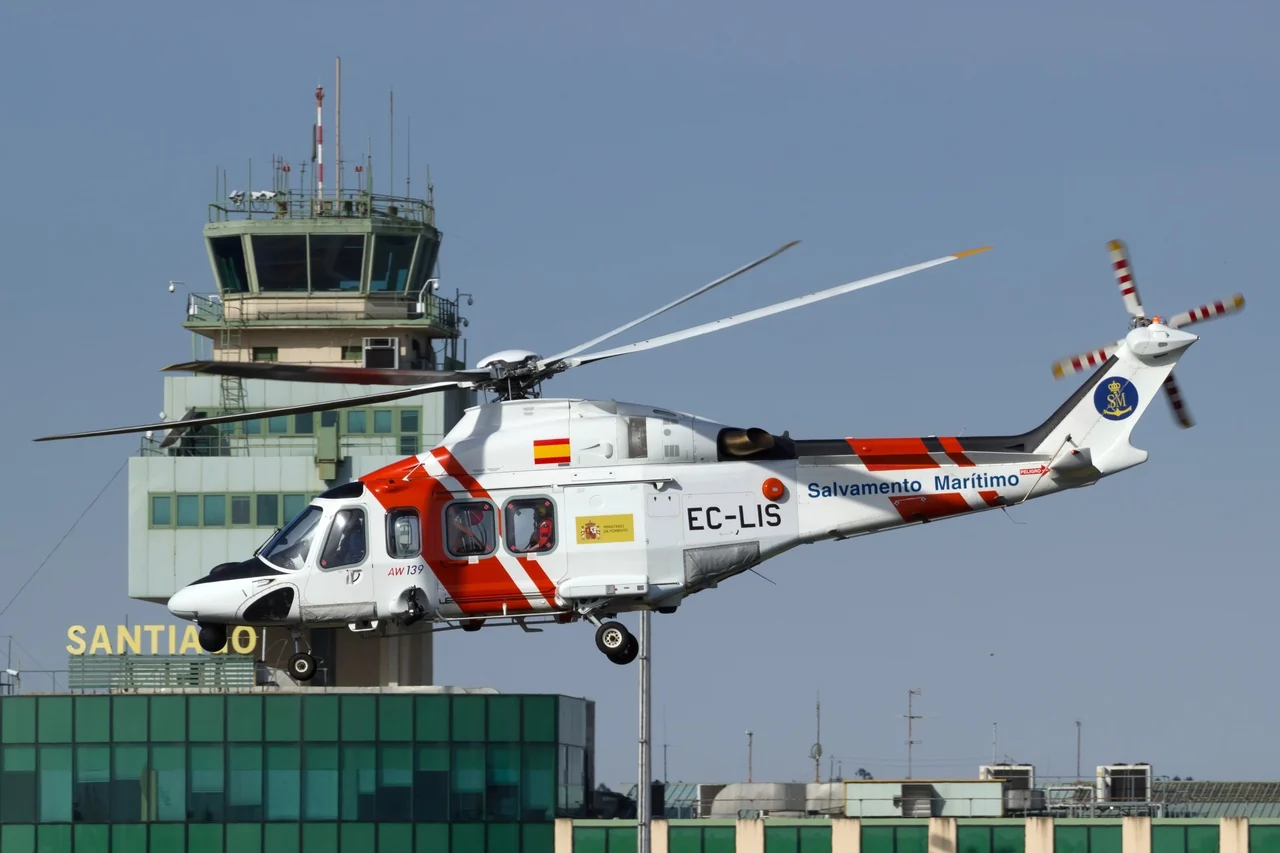


Recognise it overhead
Recognition clues checked 30 September 2026
- Main rotor
- Five blades; a clear still image is more useful than a blurred rotor disc. [2]
- Undercarriage
- Retractable wheels in a tricycle arrangement, so visibility changes with gear position. [2]
- Cabin access
- Large sliding cabin door on each side; cockpit access has separate hinged doors. [5]
Use several visible clues together. If a detail is too far away to see, leave it uncertain.
Could also be: Airbus H145 and EC145
Key facts
The AW139 is a helicopter worth learning in Ireland because it is part of the Air Corps fleet, with roles including army support, air ambulance, military transport and general utility. The Defence Forces records its entry into service in November 2006. Recognising one gives you context, but does not establish which of those jobs it is doing overhead [4].
It also exists well beyond military service. Leonardo describes versions for offshore transport, search and rescue, medical work, public safety and executive passengers. A type name describes the machine; it does not identify its operator or the purpose of today's flight [8].
How to spot one
Use a combination of structure rather than the paint scheme. EASA's type description records a five-bladed main rotor, a four-bladed tail rotor and retractable tricycle landing gear. Those are useful checks in a clear photograph. They are much less useful when the entire helicopter occupies a few pixels [2].
The conventional tail rotor provides a good comparison with the modern Airbus H145, whose tail rotor is enclosed in a Fenestron duct. If your image clearly shows an exposed rotor, that argues against that modern H145 configuration. It does not prove AW139, because a distinguishing feature is not necessarily unique [2] [7].
Wheels are another check. The EASA operational evaluation describes two single main wheels and a twin nose wheel. The gear retracts, so do not demand the same outline in a cruising photograph as in a landing photograph. “No wheels visible” should remain just that observation [5].
At closer range, look for the large sliding cabin door on each side, separate from the hinged cockpit doors. EASA's evaluation describes two windows in each sliding door and additional cockpit glazing in the lower nose and roof. These are features to compare with a sharp reference image, not details to invent in a distant silhouette [5].
For a useful sighting record, try this order: tail arrangement, visible landing gear, reliable rotor count, then readable registration or operator markings. Leave a field unknown when the viewing angle hides it. A checklist should help you notice evidence, not make you fill in every answer.
Lookalikes and the family resemblance
Leonardo deliberately gave the AW169, AW139 and AW189 a common external design philosophy. Its AWFamily brochure describes their streamlined shape, high rotors and retractable wheeled landing gear. Similarity between these aircraft is therefore an intended characteristic, not a failure of your observation [6].
That makes “sleek helicopter with wheels” a weak identification on its own. Without readable markings or a strong reference photograph, keep the conclusion at family level. Record why you think AW139 and which alternative you have not ruled out. A plausible candidate is more useful than a confident wrong answer [6].
Even within AW139, the nose is not a single unchanging template. EASA's issue 25 certificate description includes a Long Nose configuration alongside the other type definition. A match to one photograph is not grounds for rejecting another documented configuration [2].
The tracking code has limits too. The FAA's designator list puts AW139 under A139 and includes related names such as AB139 and MH-139 Grey Wolf in that entry. If a flight-tracking card supplies only the code, use other evidence before attaching a specific military variant or operator to it [1].
Over Ireland
The Defence Forces fleet page, checked on 30 September 2026, lists six AW139s. It says they are mainly used for army support while also naming medical, transport and utility roles. Those are statements about the fleet's capabilities and use, not confirmation of an individual sortie [4].
If you watch one pass near a hospital or military installation, retain the location as context rather than a diagnosis of the flight. A useful note might say “AW139 candidate, markings partly visible, heading west”. It should not say “carrying a patient” unless a reliable source actually establishes that. The same restraint applies to photographs of people or equipment on board.
What a rescue fit does and does not mean
Leonardo explains that the cabin can be configured for search and rescue or medical evacuation, with equipment and layouts adapted to the task. It also offers ice-protection systems as options. A capability advertised for the type does not tell you whether a particular helicopter has that equipment fitted [3].
EASA's earlier evaluation ties operation in known icing to the full ice-protection kit being installed and operative. An identification cannot establish that condition. This guide should help you understand what you saw, rather than judge the crew's weather decisions [5].
Numbers that need their conditions
Leonardo's product page gives a rotor diameter of 13.8 m and capacity of up to 15 passengers. It lists maximum cruise at 165 knots under specified conditions, and maximum range with auxiliary fuel and no reserve. These are reference figures, not the speed, passenger count or safe remaining range of your sighting [3].
For a memorable observation, separate three things: the aircraft structure you saw, the identity independently attached to it, and the mission still unknown. That habit makes the next sighting easier to interpret without turning an ordinary flight into a story the evidence cannot support.
Original drawings
Kagoshima Prefecture's June 2025 fire and disaster helicopter guide includes an AW139 three-view dimension drawing on PDF page 5. It is a reference for the helicopter configuration documented there, not evidence of an Irish airframe's installed equipment [9].
In photographs
Look closer at the shapes, details and liveries. Every photograph links to its original and credits its creator.
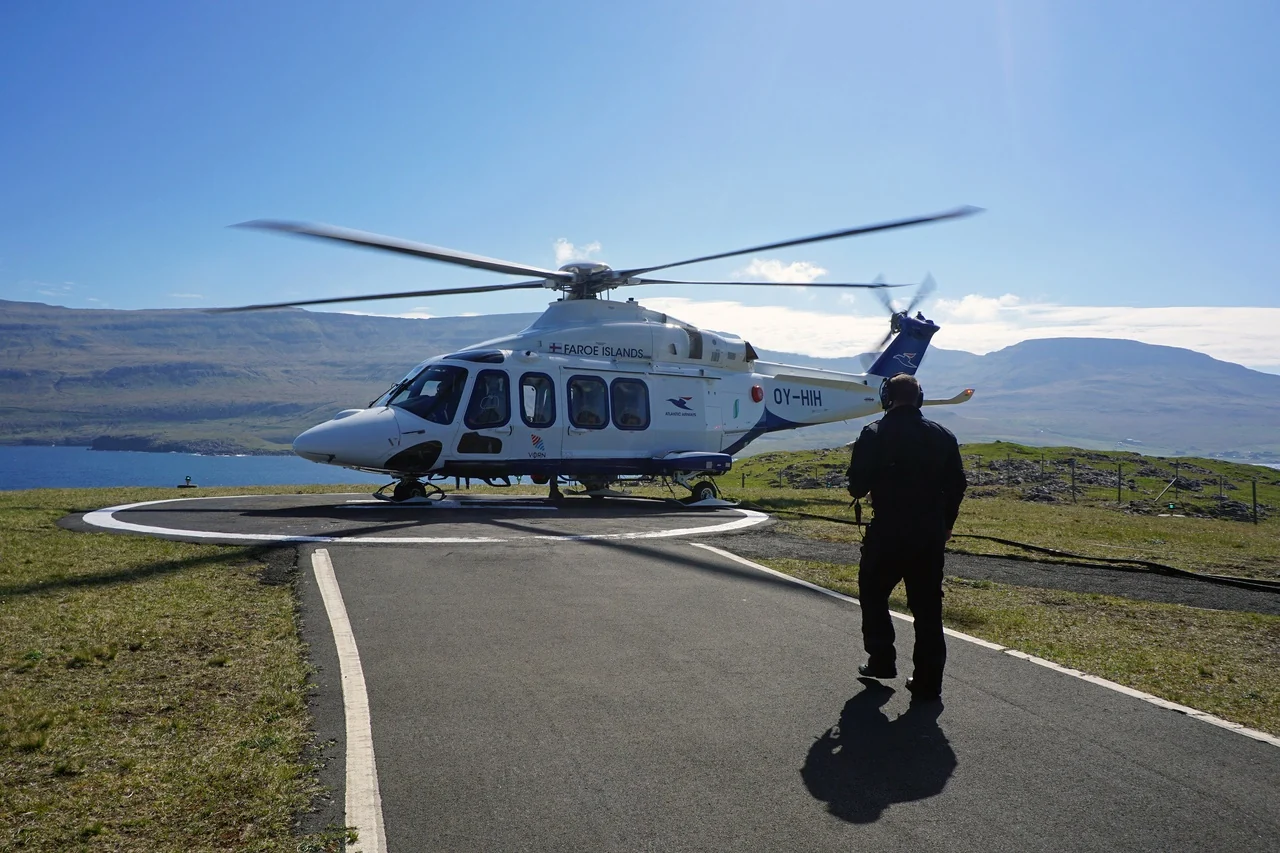
Atlantic Airways AW139 OY-HIH at Froðba helicopter station. This grounded view shows the cabin windows and landing gear.
kallerna · CC BY-SA 4.0 · Source and credits · Taken on 17 May 2019, 16:35:41

View full-size · Original imageResized WebP display copy.

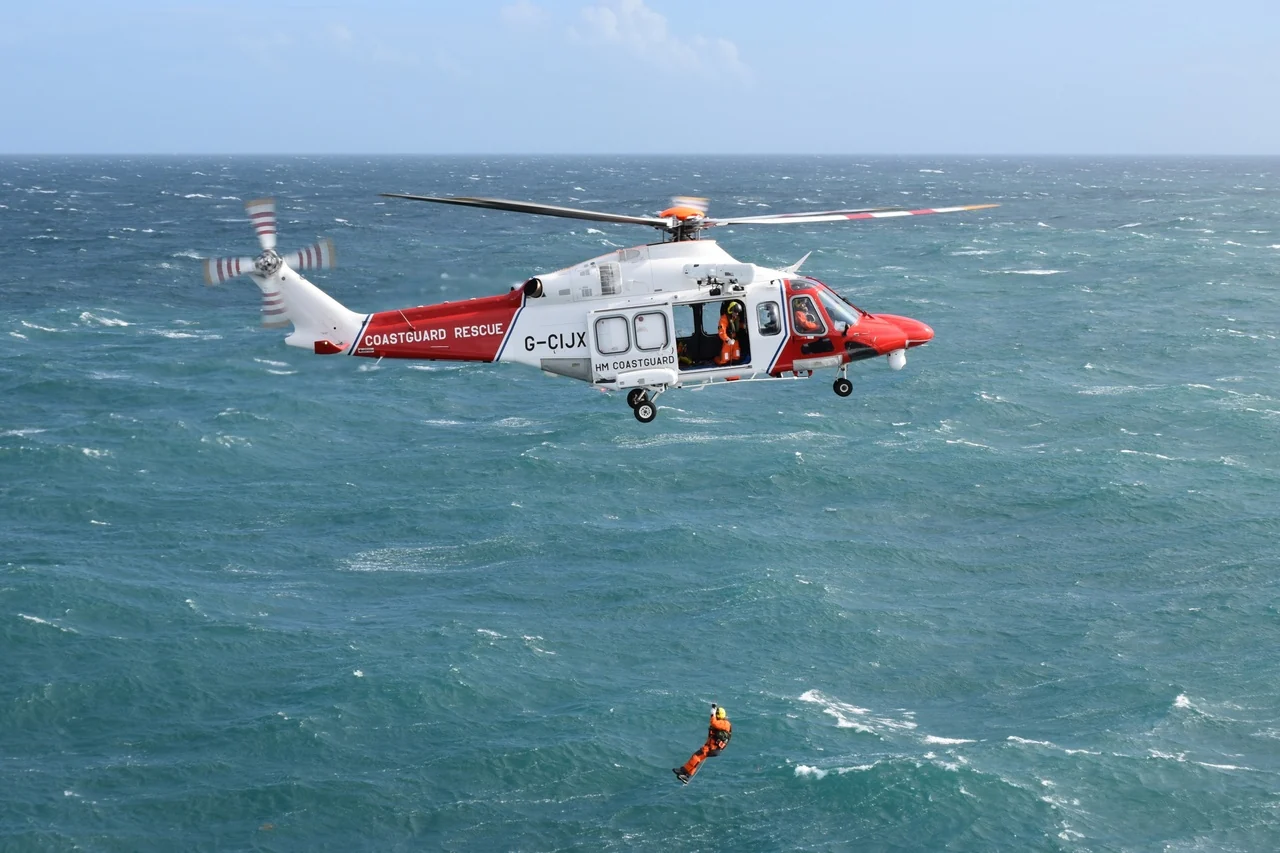
HM Coastguard AW139 G-CIJX during an exercise over the English Channel. Its side profile and extended landing gear are visible.
Niels Johannes · CC BY-SA 4.0 · Source and credits · Taken on 20 August 2016, 19:53:11

View full-size · Original imageResized WebP display copy.

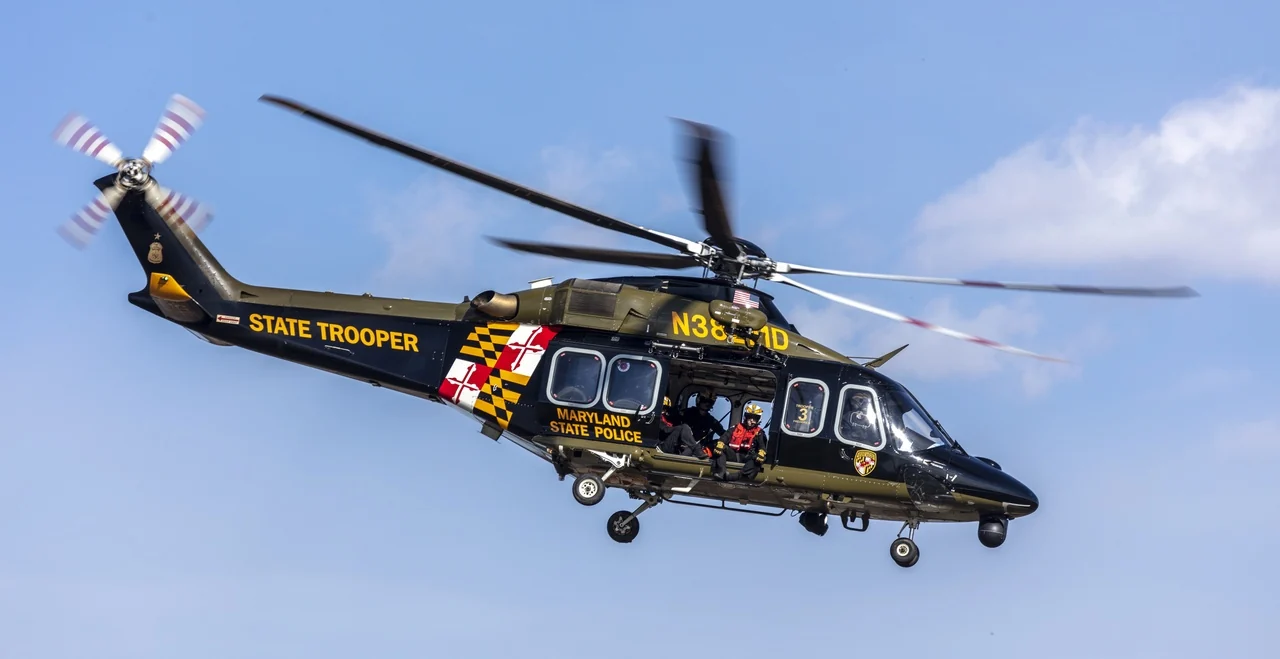
Maryland State Police AW139 N382MD during a hoist exercise. The visible equipment describes this photographed configuration.
Acroterion · CC BY-SA 4.0 · Source and credits · 2022-03-15

View full-size · Original imageResized WebP display copy.

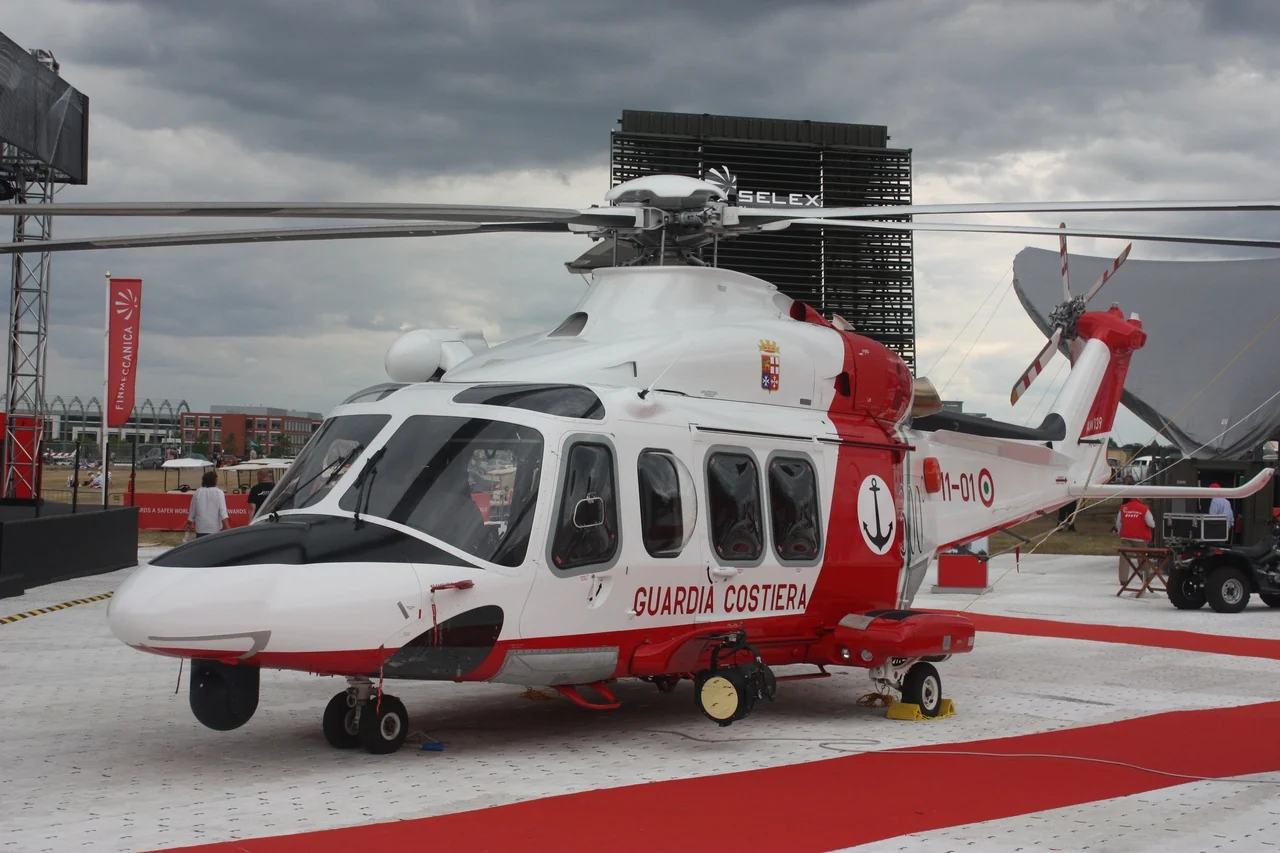
An Italian Coast Guard AW139 on the ground, with its cabin doors, windows and wheeled undercarriage visible.
Tomasz Dunn · CC BY 2.0 · Source and credits · 2010-07-25 15:31:46

View full-size · Original imageResized WebP display copy.

Drawings and original documents
Kagoshima Prefecture’s June 2025 helicopter guide contains an AW139 three-view dimension drawing on PDF page 5. The original is linked below; reproduction rights remain with its publisher.
- Kagoshima Prefecture AW139 helicopter guide
The prefecture’s June 2025 fire and disaster helicopter guide, in Japanese. PDF page 5 contains the documented AW139 configuration’s three-view dimension drawing.
- Irish Defence Forces AW139 fleet record
The Air Corps’ own account of the AW139 fleet, service entry and roles. Fleet quantities are date-sensitive.
See one for yourself
Skylark shows what is flying over Ireland right now, and the iPhone app points you at it. Next time you hear engines, look for the A139 code.
Sources
Facts checked against these sources on 30 September 2026. Numbers that change over time, such as orders and fleet sizes, are as of the date given beside them.
- Order JO 7360.1G, Aircraft Type Designators, A139 entryFAA
- AB139 AW139 type certificate data sheet, issue 25, 8 September 2021EASA
- AW139 product and technical dataLeonardo
- AW139 fleet and rolesIrish Defence Forces
- AB AW139 operational evaluation report, revision 4, 15 October 2012EASA
- AWFamily brochureLeonardo
- H145Airbus
- AW139: a success story in technology, reliability and versatilityLeonardo
- AW139 fire and disaster helicopter guide, June 2025Kagoshima Prefecture
How often does Skylark see it?
Read the existing Ireland observation log to see the days each type appeared. This is what Skylark recorded, with the coverage its receivers and providers supplied; it is not a census of Irish aircraft or a prediction of your next sighting.
One aircraft seen on three different days contributes three airframe-days. Repeated reports on the same day count once. Codes are shown separately, without adding them into a family total. A logged day does not mean continuous coverage throughout that day.
Observations load when you request them.