

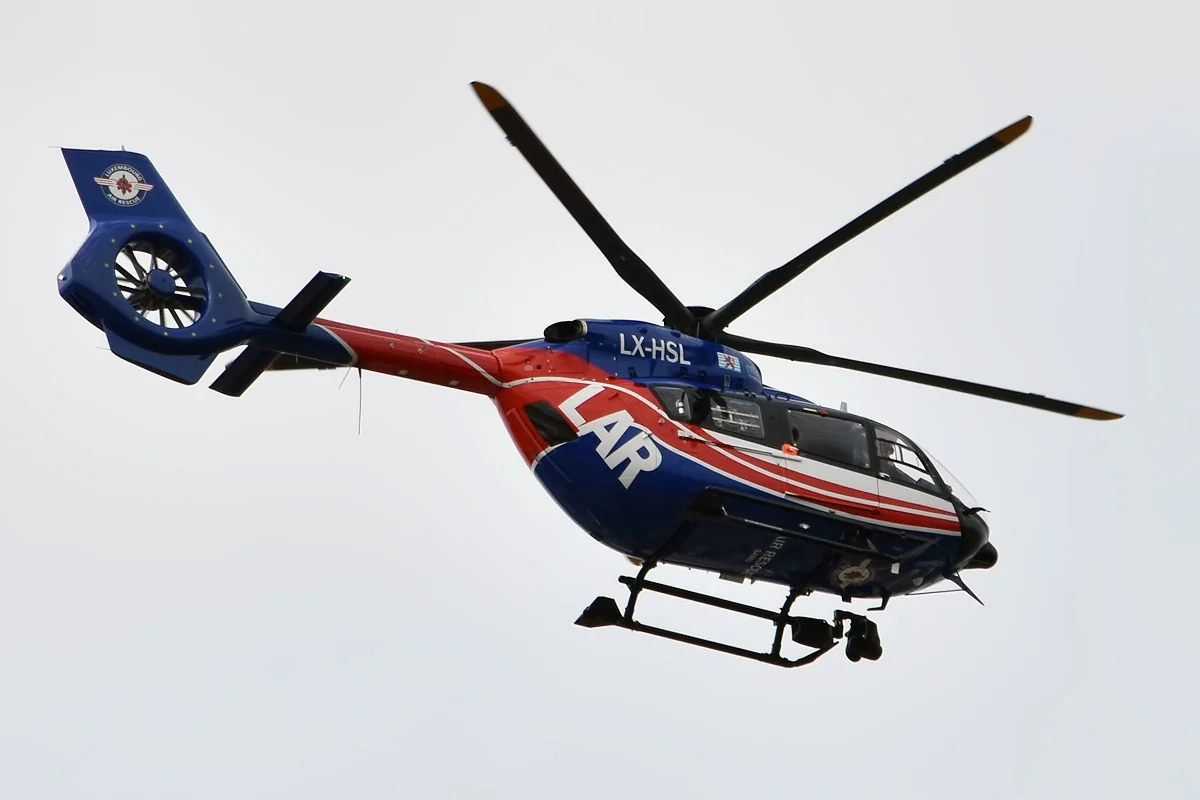


Recognise it overhead
Recognition clues checked 30 September 2026
- Tail
- Modern H145 has a shrouded Fenestron tail rotor; earlier EC145 C-2 has an exposed rotor. [2] [8]
- Rear access
- Rear-loading clamshell doors are a useful close-up cue. [6]
Use several visible clues together. If a detail is too far away to see, leave it uncertain.
Could also be: Leonardo AW139
Key facts
An H145 sighting becomes more interesting when you ask two separate questions: which helicopter is this, and what evidence do I have about its job? Airbus offers the twin-engine type for medical, police, offshore and passenger work. Its shape alone cannot choose between those roles [2].
There is also a naming trap. The flight-tracking code EC45 covers the H145, EC145 and several related names in the FAA's published designator list. That makes a code useful for finding this guide, but insufficient for deciding the exact version. Treat the label as a starting point, then look at the aircraft [1].
How to spot one
Start with the tail, provided you have a side view. A modern H145 has its tail rotor inside a circular duct, called a Fenestron. The older EC145 C-2 and C-2e have an exposed two-bladed tail rotor. EASA's 2014 family description records that distinction; the current Airbus H145 page confirms the shrouded arrangement [2] [8].
This is a useful way to narrow the family, not a complete identification. Airbus also uses the Fenestron on the H130, H135, H155 and H160. Seeing a round opening in the tail does not by itself mean H145. If that is your only clear feature, record it as a clue rather than promote it into certainty [7].
The main rotor provides another check in a sharp photograph. H145s exist with four and five blades. Airbus introduced the five-bladed version in 2020, with a bearingless rotor and an increase in useful load of 150 kg. Do not count the streaks in a blurred phone image as if they were a parked rotor [2].
Close-up views can reveal the rear-loading clamshell doors. Airbus describes these as a feature of the H145's large cabin, with access through both side and rear doors for bulky loads. For a distant overhead pass, write down that the rear was hidden rather than assuming the feature was absent [6].
A practical observation sequence is to note the tail arrangement first, then any reliable blade count, then readable markings. Keep the uncropped photograph too. If you later compare it with a known airframe, a small detail outside your original crop may be the useful one.
Four blades, five blades, and the age trap
Five blades do not prove a helicopter was newly built. Airbus reported its first retrofit in May 2021: an H145 originally delivered to DRF Luftrettung in 2018 received the newer rotor. The conversion also involved a Helionix update and a new horizontal stabiliser [5].
The lesson for a spotter is specific. A photograph can support a description of the rotor configuration visible that day. It cannot turn that configuration into a manufacturing date. If you want the airframe's history, start with its registration and a dated register or operator record rather than guessing from the blades [5].
The rotor has a curious development story. Airbus first tested the concept on Bluecopter, a heavily modified H135 demonstrator unveiled in 2015. The results led engineers to try it on the H145, followed by calculations, simulation and further testing. The feature you can count in a photograph therefore connects two helicopter programmes [9].
What its equipment can tell you
Airbus lists cameras, a searchlight and an external hoist among possible police equipment. It also describes medical interiors, offshore hoisting equipment and corporate passenger layouts. These are configurations the type can carry, not promises about every airframe [6].
Use equipment as a question to investigate. “I can see something resembling a camera mount” is an observation. “It is conducting surveillance here” is a conclusion that needs separate evidence. Likewise, a hoist does not tell you whether this flight is training, transit or an active rescue. Keep the sighting useful by preserving that distinction.
Even technical capabilities are not visible mission evidence. The five-bladed type's 2020 certification included instrument flight rules and night-vision-goggle capability, and Airbus describes a four-axis autopilot. An observer cannot infer from that approval whether goggles are being used or which automation mode is selected during a particular pass [4].
Reading the specifications honestly
The current Airbus technical page lists a 10.8 m rotor diameter and a recommended cruise of 130 knots. These describe the current H145 product, not every aircraft sharing EC45. Its published maximum range is also conditional, with standard tanks at sea level. A specification is not a prediction of where the helicopter overhead will land [3].
For another helicopter to compare with, see the Leonardo AW139. Keep the aim modest and useful: identify visible structure, attach a confidence level, and leave the current mission unresolved until an operator or another authoritative source actually confirms it.
Original drawings
For a closer study of the outline, Airbus's original ground rescue booklet includes three-view dimension drawings for the D-2 and D-3 configurations on its printed pages 3 and 4. Read the variant label alongside each drawing [10].
In photographs
Look closer at the shapes, details and liveries. Every photograph links to its original and credits its creator.
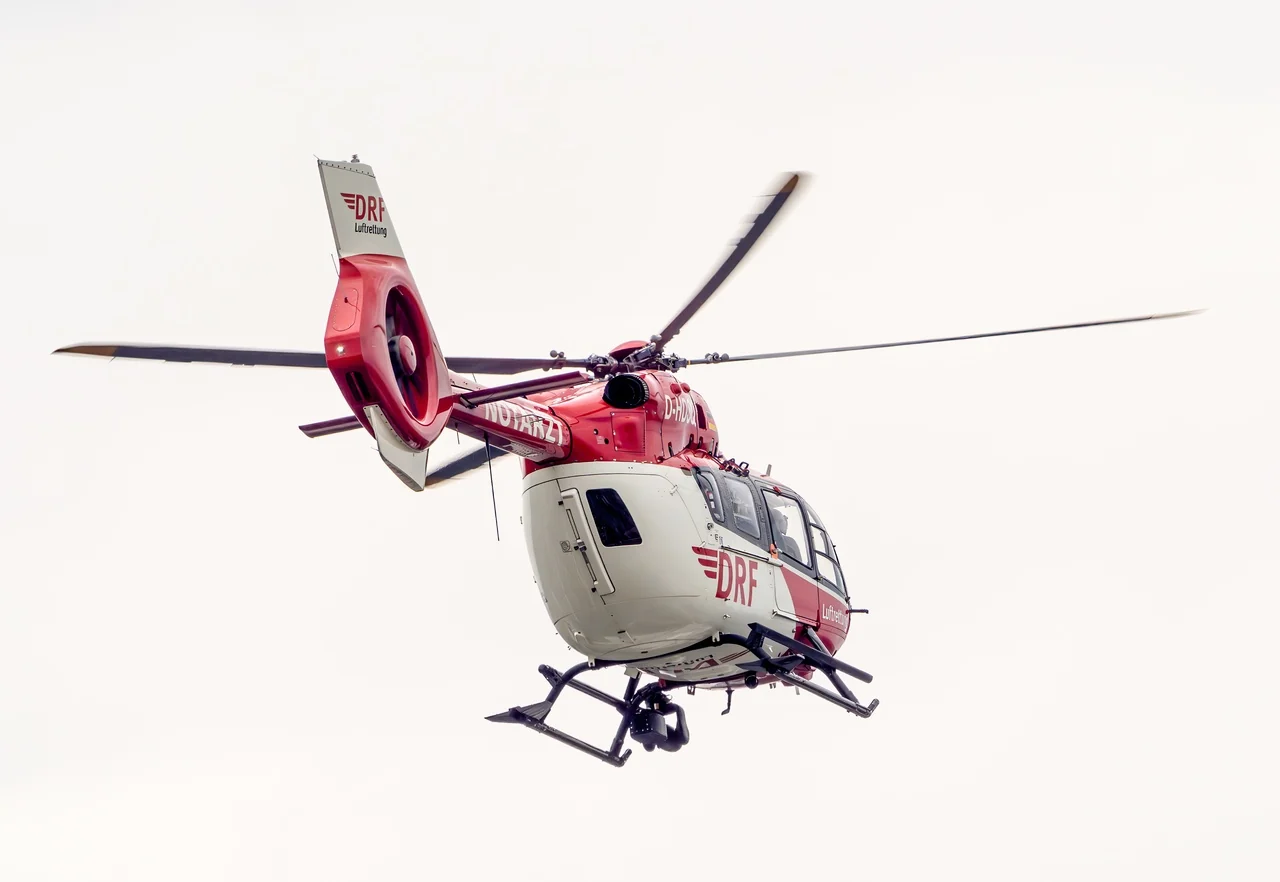
Rear view of DRF Luftrettung H145 D-HDSQ after take-off. The tail arrangement and rear doors are visible.
Reinhold Möller Ermell · CC BY-SA 4.0 · Source and credits · 2024-06-21

View full-size · Original imageResized WebP display copy.

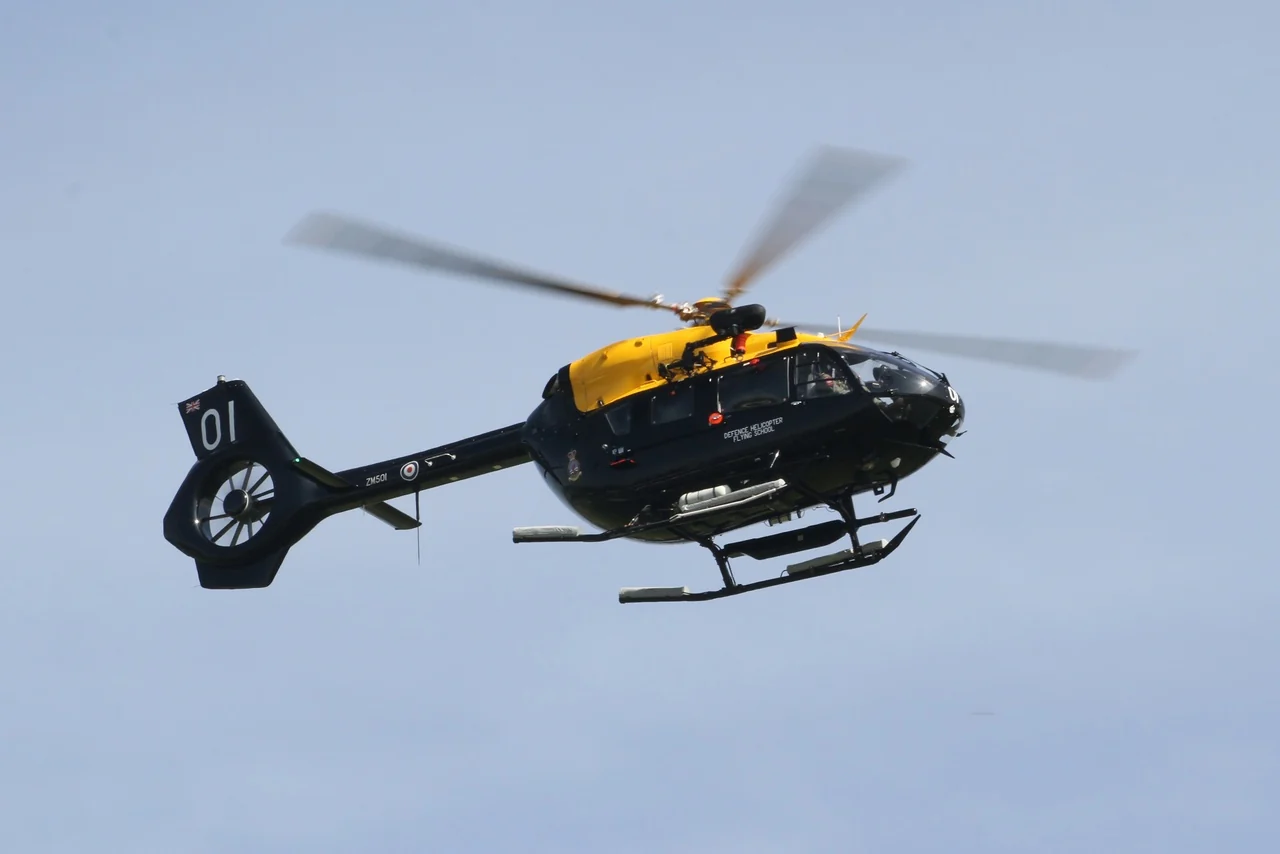
A Jupiter H145 in flight. The enclosed tail rotor is visible in this side view.
Tony Hisgett from Birmingham, UK · CC BY 2.0 · Source and credits · 2018-06-10 15:20

View full-size · Original imageResized WebP display copy.

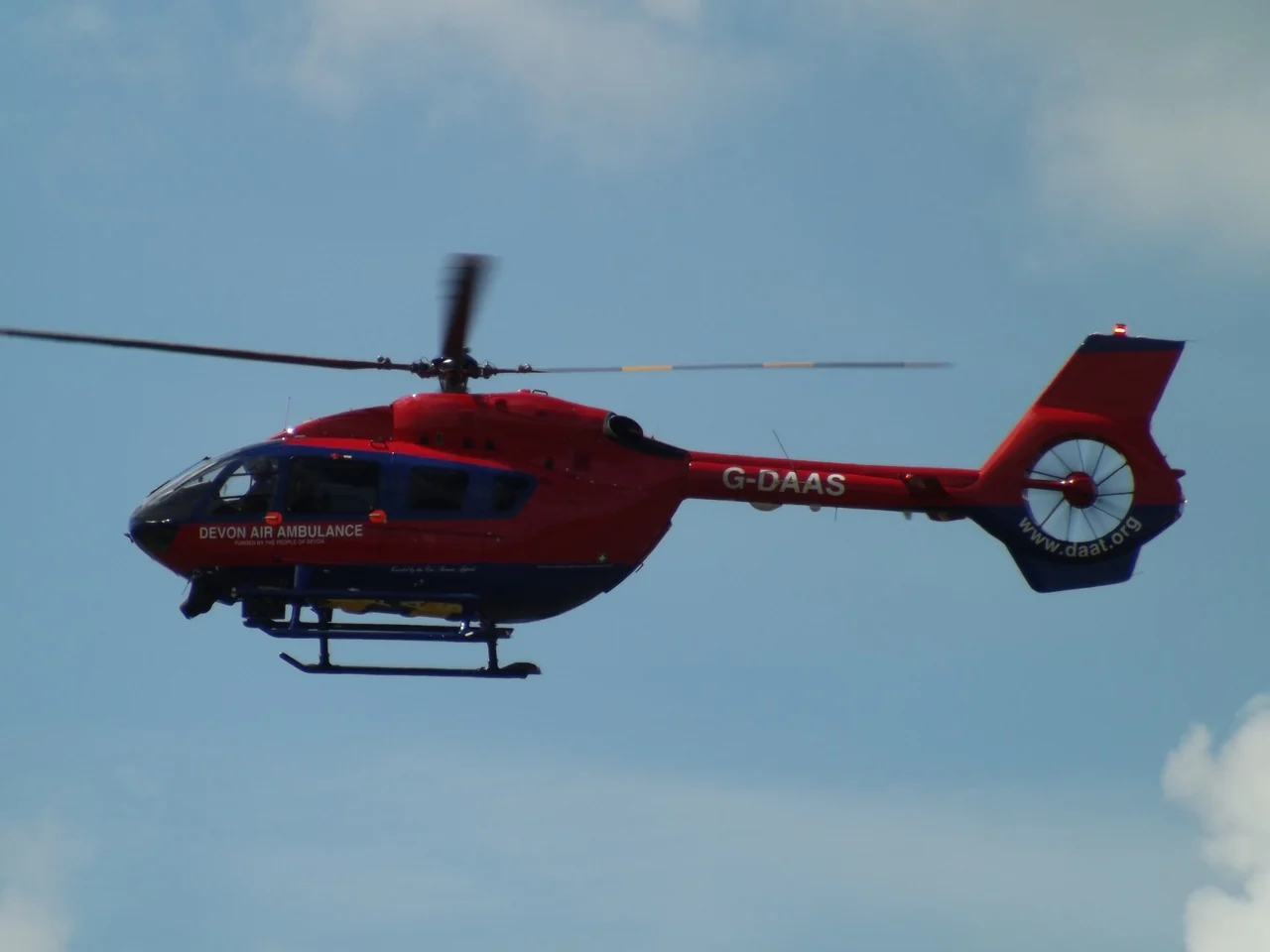
Devon Air Ambulance H145 G-DAAS in profile near Oxford Airport.
James · CC BY-SA 2.0 · Source and credits · 2020-06-16 13:54:39

View full-size · Original imageResized WebP display copy.

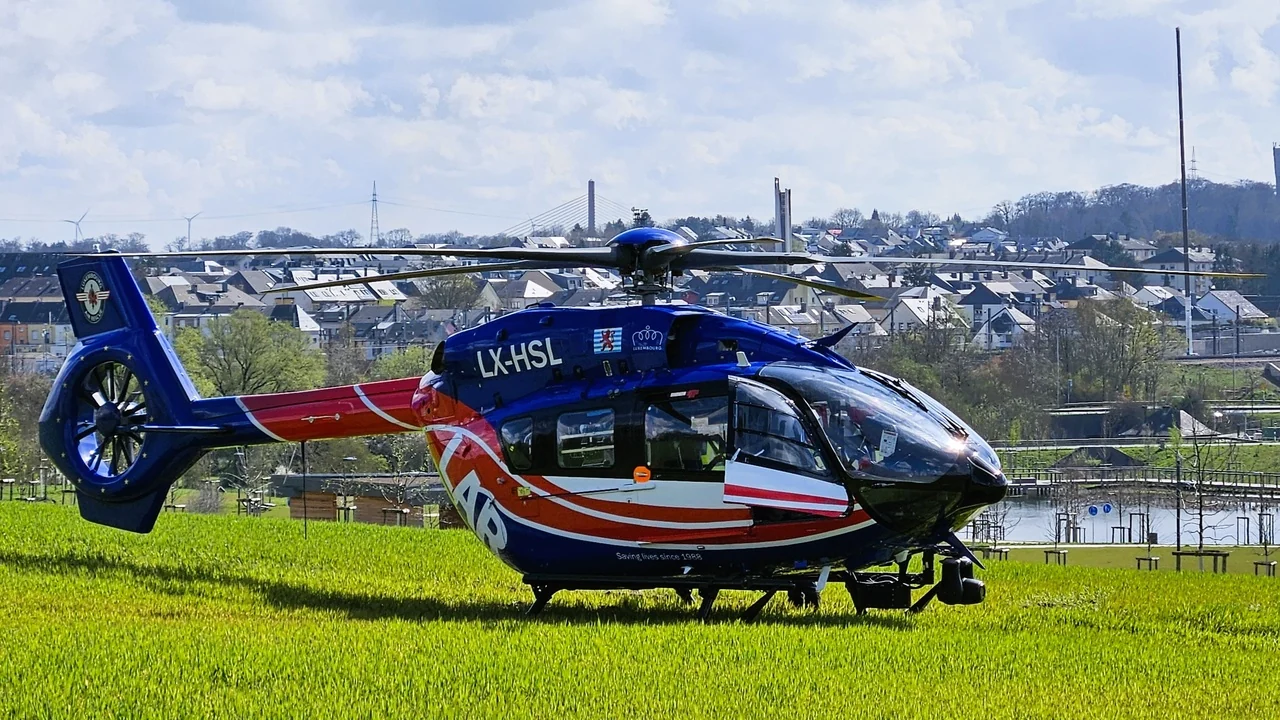
Luxembourg Air Rescue H145 D3 LX-HSL on the ground. The still rotor gives a clearer blade-count reference than a blurred in-flight disc.
GilPe · CC BY-SA 4.0 · Source and credits · 2024-03-25 11:41:21

View full-size · Original imageResized WebP display copy.

Drawings and original documents
Airbus’s original H145/H145M ground rescue booklet contains separate dimension drawings for D-2 and D-3 configurations. The original is linked below; reproduction rights remain with its publisher.
- Airbus H145/H145M ground rescue booklet
Manufacturer three-view dimension drawings for D-2 and D-3 configurations, on printed pages 3 and 4. The original booklet retains its publisher’s rights.
- Airbus H145 technical information
Current manufacturer specifications, with dimensions, performance conditions and cabin configurations.
See one for yourself
Skylark shows what is flying over Ireland right now, and the iPhone app points you at it. Next time you hear engines, look for the EC45 code.
Sources
Facts checked against these sources on 30 September 2026. Numbers that change over time, such as orders and fleet sizes, are as of the date given beside them.
- Order JO 7360.1G, Aircraft Type Designators, EC45 entryFAA
- H145Airbus
- H145 technical informationAirbus
- Five-bladed H145 receives type certification by EASAAirbus
- First five-bladed H145 retrofitAirbus
- H145 missionsAirbus
- Product safety for helicoptersAirbus
- EC145 BK117 family draft OEB report, 29 April 2014EASA
- The H145: from Bluecopter to the big-timeAirbus
- H145/H145M ground rescue booklet, revision 1Airbus
How often does Skylark see it?
Read the existing Ireland observation log to see the days each type appeared. This is what Skylark recorded, with the coverage its receivers and providers supplied; it is not a census of Irish aircraft or a prediction of your next sighting.
One aircraft seen on three different days contributes three airframe-days. Repeated reports on the same day count once. Codes are shown separately, without adding them into a family total. A logged day does not mean continuous coverage throughout that day.
Observations load when you request them.