

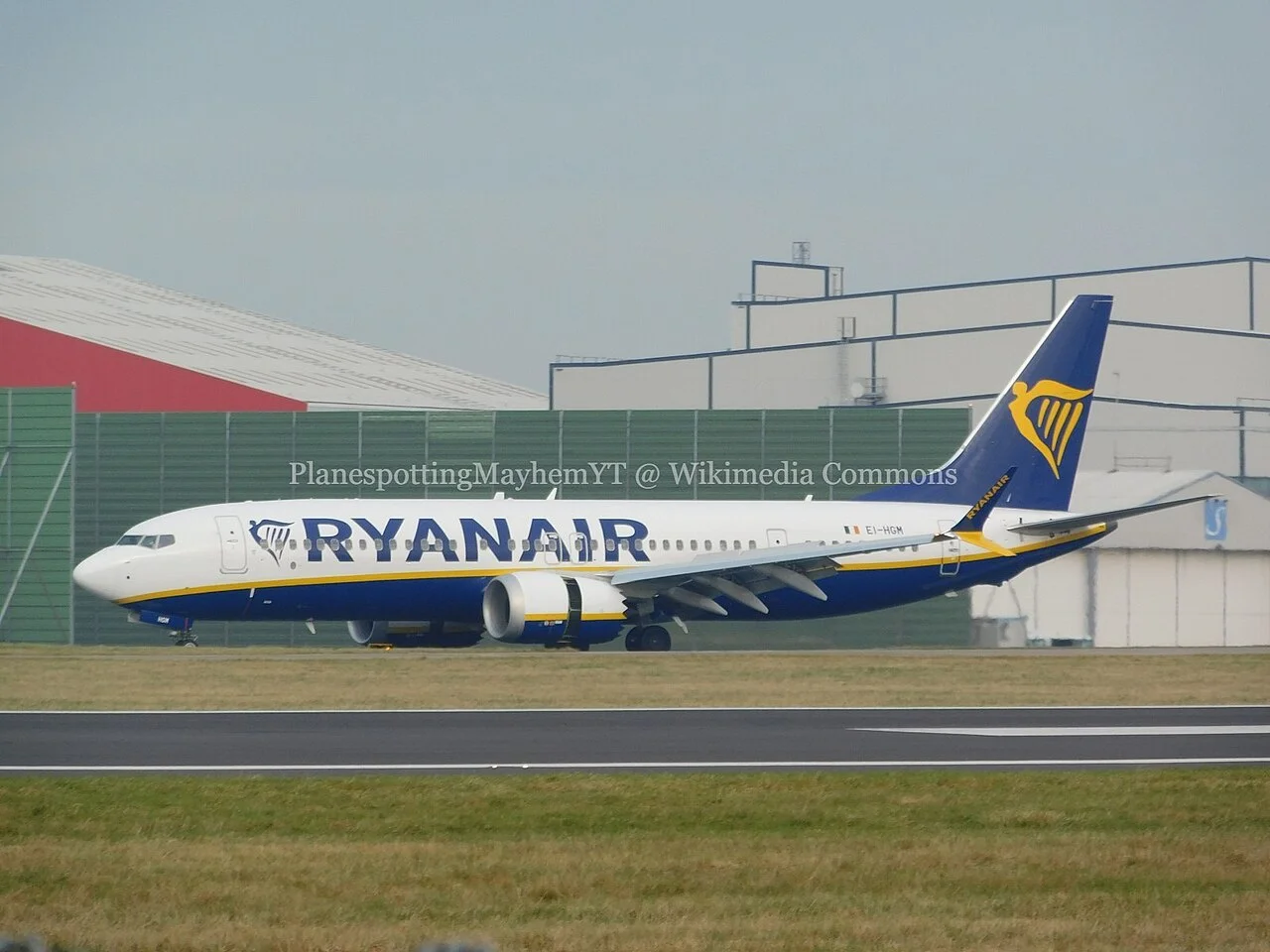


Recognise it overhead
Recognition clues checked 30 September 2026
- Engine position
- Engines are wider and sit further ahead of the wing than on a Next Generation 737. [10]
- Engine rear edge
- Look for chevrons: small sawtooth ridges around the back of the nacelles. [10]
- Wingtip
- The upper and lower winglet sections are roughly equal in size, unlike the smaller lower fin on NG split scimitars. [10]
Use several visible clues together. If a detail is too far away to see, leave it uncertain.
Could also be: Boeing 737-800, Airbus A320neo
Key facts
The 737 MAX is the newest 737. It keeps the fuselage of the 737-800 and its Next Generation siblings, and adds new engines, new wingtips and a history that kept it on the ground in the United States for twenty months [3] [12]. As of September 2026, Ryanair flies 210 of them in a high-density version, the 737-8200 [9].
New engines on a familiar shape
The first 737 MAX 8 took off from Renton Field at 9:46 a.m. on 29 January 2016, flown by 737 MAX chief pilot Ed Wilson and Boeing chief test pilot Craig Bomben. It landed at Boeing Field 2 hours and 47 minutes later [1]. By then the programme had 3,072 orders from 62 customers [1].
Boeing's pitch was fuel. The MAX uses CFM's LEAP-1B engine [1] [2], and Boeing promised 20 per cent lower fuel use than the first Next Generation 737s [1]. The catch was size: the new engines are larger, and sit higher and further forward than the ones on the Next Generation 737 [3], a detail that became central to what happened next.
The UK type certificate covers three MAX models, the 737-8, the 737-9 and the 737-8200 [2]. The FAA certified the 737-8 on 8 March 2017 and the 737-9 on 15 February 2018 [2]. The smallest member, the 737-7, followed on 3 August 2026, with Southwest Airlines as launch customer, and Boeing said then that it was working to certify the largest, the 737-10, during 2026 [6]. Boeing's releases have moved from "737 MAX 8" to "737-8" over the years [1] [6], but they are the same aircraft.
The accidents and the grounding
On 29 October 2018, Lion Air flight 610, a 737 MAX, crashed shortly after take-off from Jakarta, and all 189 people on board died [3]. On 10 March 2019, Ethiopian Airlines flight 302, also a 737 MAX, crashed shortly after take-off from Addis Ababa, killing all 157 people on board [3]. Between them the two accidents, less than six months apart, claimed 346 lives [4].
Both involved MCAS, the Maneuvering Characteristics Augmentation System [3]. It is flight control software that can command the horizontal stabiliser to trim the nose down, and it was added to compensate for the aerodynamic pitch effects of the larger, more forward engines [3]. The original design relied on a single angle of attack sensor. With a continuous false high reading from that sensor, MCAS reset each time the pilots released their electric trim switches, and five seconds later commanded the nose down again [3]. On the Lion Air aircraft, a replacement sensor had been mis-calibrated during an earlier repair [3].
On 13 March 2019, the FAA issued an emergency order grounding the 737 MAX in the United States [3]. The type was grounded worldwide that month [4].
The fixes the FAA required were specific [3]:
- MCAS now compares both angle of attack sensors, and does not act if they disagree by more than 5.5 degrees.
- It activates only once for each high angle of attack event.
- Its command is limited, so that it always leaves the pilots enough elevator movement to control the aircraft's pitch.
- The flight control computers monitor each other and can detect and shut down erroneous stabiliser commands.
- Pilots follow revised procedures in the flight manual and must complete new training.
On 18 November 2020, FAA Administrator Steve Dickson signed the rescission of the grounding order, and the FAA issued an airworthiness directive the same day [12]. The European Union Aviation Safety Agency ran its own review and cleared the aircraft for Europe on 27 January 2021 [4]. Its executive director, Patrick Ky, said the assessment was carried out "in full independence of Boeing or the Federal Aviation Administration" [4].
One more event belongs here. On 5 January 2024, the left mid exit door plug on an Alaska Airlines 737-9 separated as it climbed after take-off from Portland International Airport. Eight people had minor injuries [5]. The US National Transportation Safety Board found the probable cause was Boeing's failure to provide adequate training, guidance and oversight so that its manufacturing staff could consistently and correctly follow its parts removal process, which is meant to make sure bolts and hardware removed during rework are properly reinstalled. The FAA's ineffective compliance enforcement surveillance and audit planning contributed [5].
The 737-8200
The 737-8200 is a high-density 737-8. It adds a pair of mid-exit doors, which The Air Current reported raised its maximum seating to 200 passengers [7]. The FAA certified it on 31 March 2021 [2] [7]. On 16 June 2021 Ryanair announced it had taken delivery of its first in Seattle, configured with 197 seats; it flew overnight to Dublin Airport [8]. Ryanair said the type would cut its fuel consumption per seat by 16 per cent [8].
How to spot one
The MAX shares its fuselage with the 737-800, so look at the ends and the engines:
- Engines. Much wider than on a Next Generation 737, and set further in front of the wing. The back edge of the engine has chevrons, a row of small sawtooth ridges that reduce noise [10] [11].
- Wingtips. Split winglets whose upper and lower parts are roughly the same size [10], with flat, square tips rather than the pointed tips on a Next Generation 737 [11].
- Tail cone. Pointed, and extending further behind the tail than the shorter, blunter cone on a -800 [11].
- Nose gear. Longer, leaving a noticeable gap between the tops of the tyres and the gear doors [11].
Telling the versions apart takes a closer look. The 737-9 is longer, 42.11 m against 39.5 m for the 737-8 [2]. The 737-8200 is the same length as the -8 [2] but has the extra pair of exit doors [7]. For the Airbus rival with similarly large engines, see the A320neo.
Over Ireland
Ryanair's MAX fleet is large and still growing. As of September 2026, the airline listed 210 Boeing 737-8200s in its fleet, each with 197 seats, and 300 737 MAX 10s on order for delivery by 2034 [9].
From the archive
On its first flight, the MAX 8 flew for two hours and 47 minutes and reached 25,000 feet; onboard equipment sent live test data to the team on the ground. [1]
The first MAX flew from Renton Field at 09:46 and landed at Boeing Field at 12:33 local time, on 29 January 2016. [1]
In photographs
Look closer at the shapes, details and liveries. Every photograph links to its original and credits its creator.
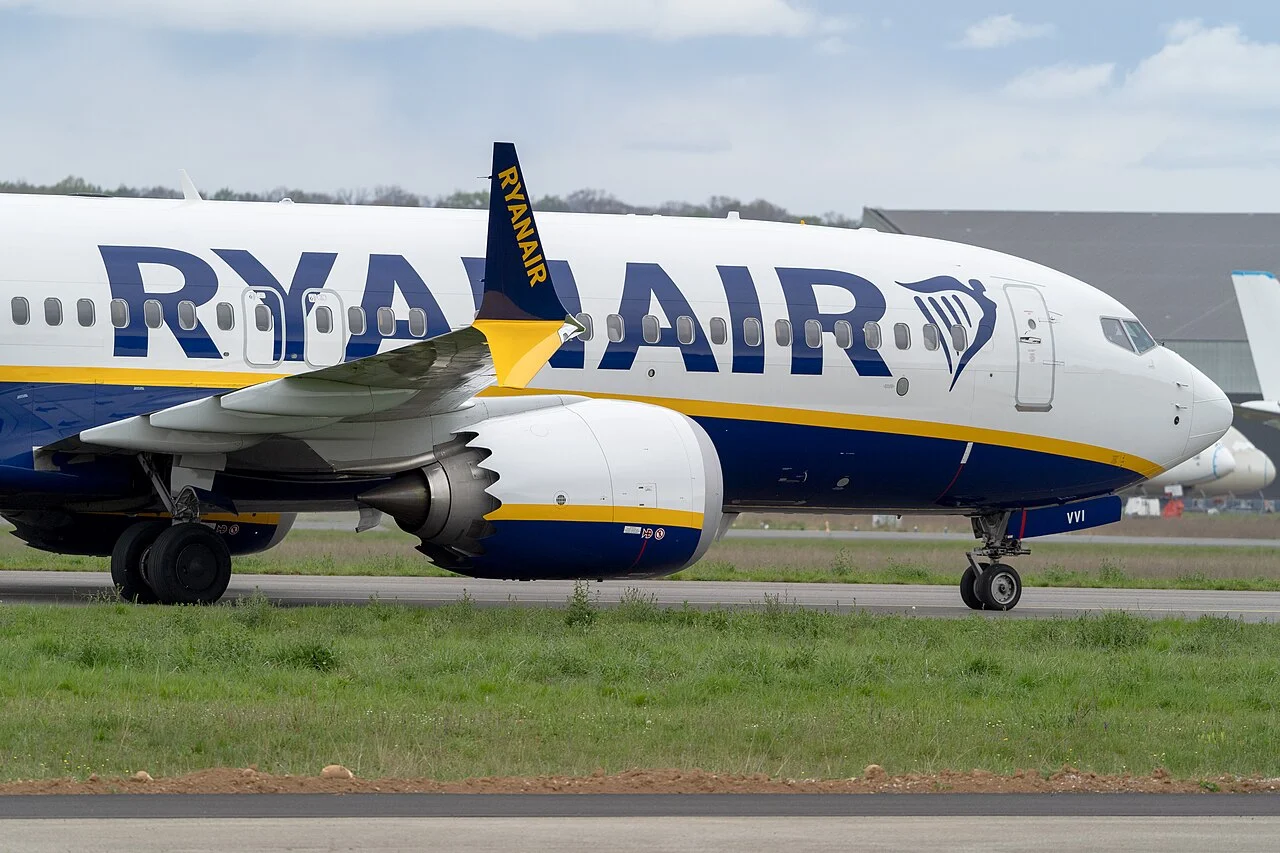
A close view of the engines and wing on Ryanair MAX 8-200 9H-VVI.
Hugo LUC · CC BY-SA 4.0 · Source and credits · 2024-03-31

View full-size · Original imageResized WebP display copy.

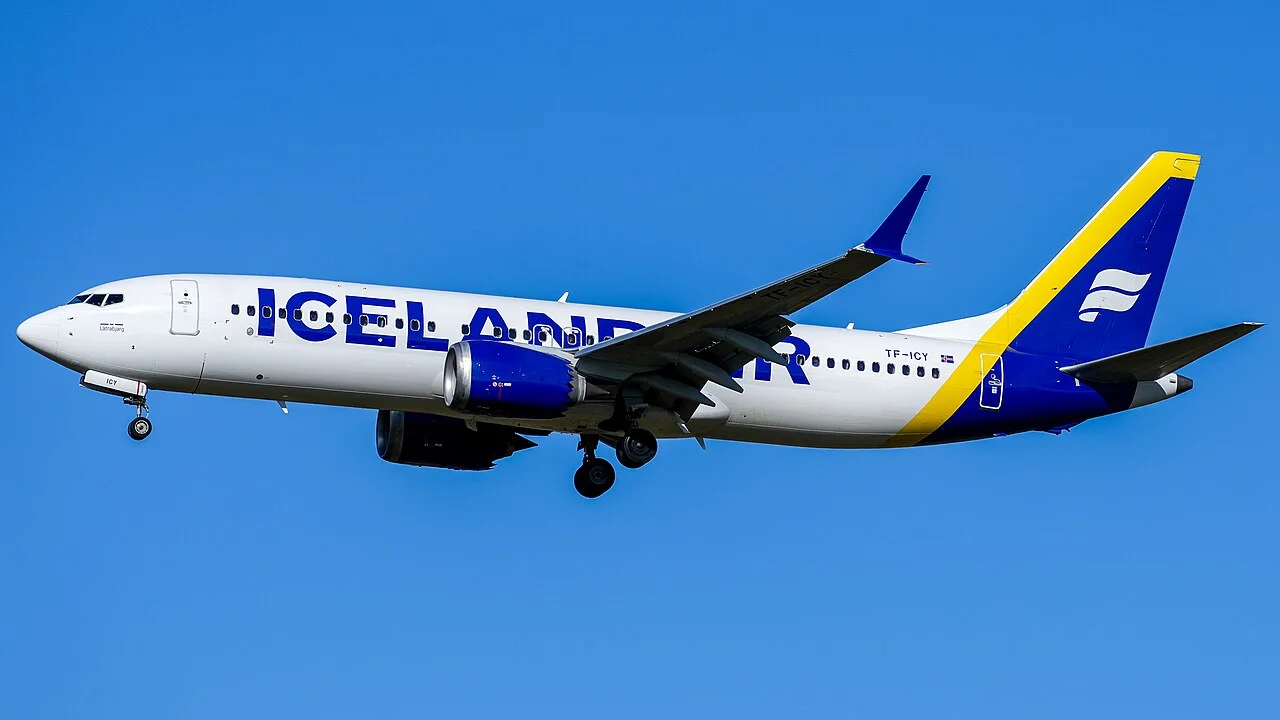
Icelandair 737 MAX 8 TF-ICY at Berlin Brandenburg.
MarcelX42 · CC BY-SA 4.0 · Source and credits · 2024-02-24 11:49:13

View full-size · Original imageResized WebP display copy.


Grounded MAX aircraft parked near Boeing Field in April 2019, an archive photograph from the worldwide grounding.
SounderBruce · CC BY-SA 4.0 · Source and credits · 2019-04-24 12:47:54

View full-size · Original imageResized WebP display copy.

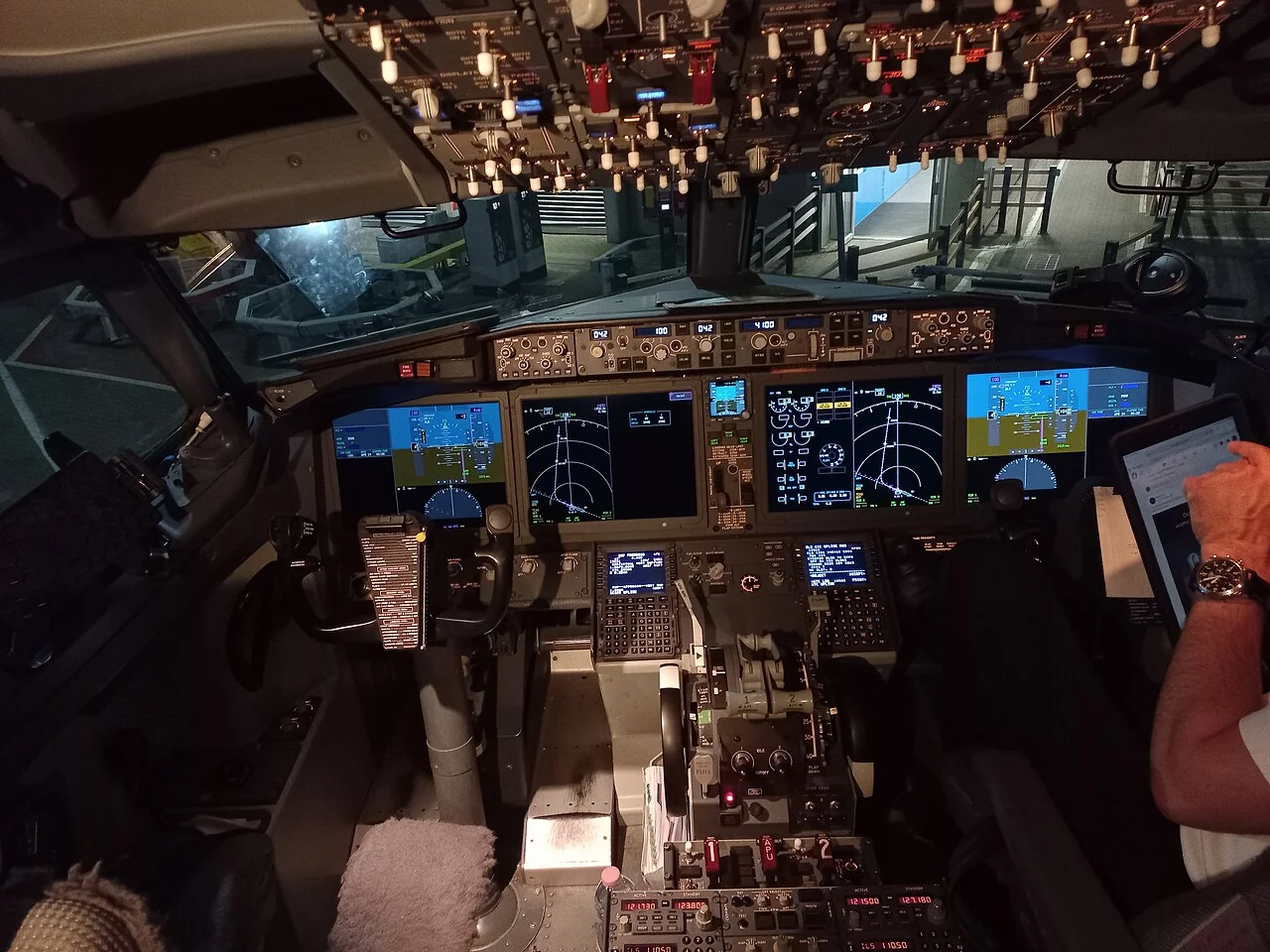
Inside a real 737 MAX cockpit, with control yokes and large instrument displays.
GeoMancer448 · CC BY 4.0 · Source and credits · 2024-04-16 20:56:16

View full-size · Original imageResized WebP display copy.

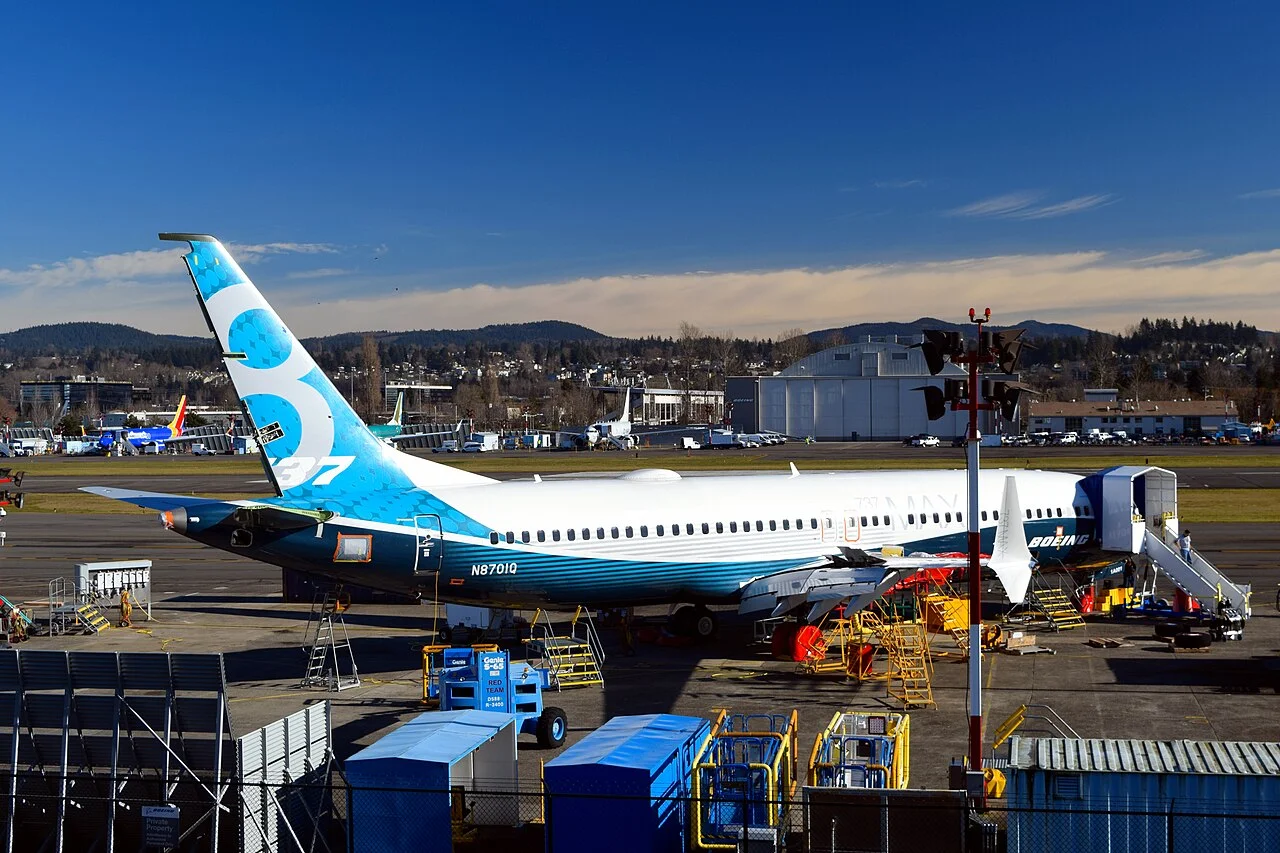
Boeing test aircraft N8701Q, a MAX 8 in manufacturer colours.
John Crowley from Seattle, WA, USA · CC BY-SA 2.0 · Source and credits · 2017-01-27 12:59

View full-size · Original imageResized WebP display copy.

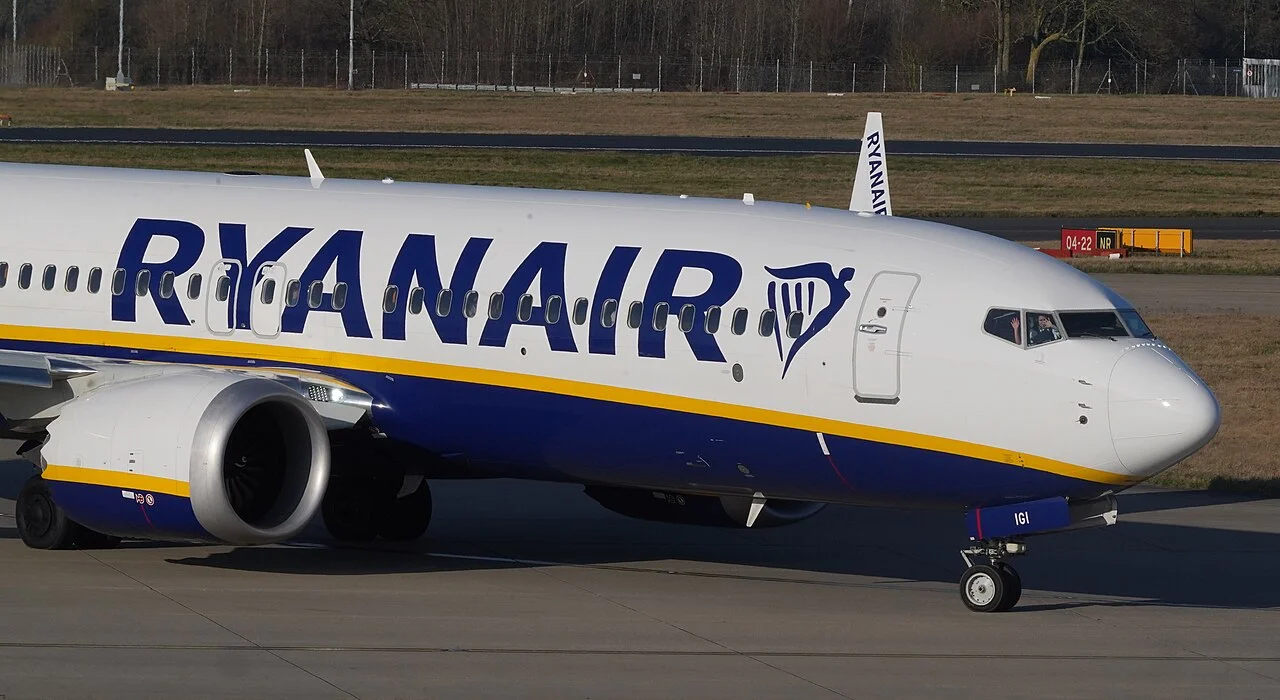
Ryanair MAX 8-200 EI-IGI at Stansted in January 2024. The extra door behind the wing is visible.
kitmasterbloke · CC BY 2.0 · Source and credits · 2024-01-13

View full-size · Original imageResized WebP display copy.

Drawings and original documents
Manufacturer planning drawings are linked below. Reproduction rights are retained by the publisher.
- 737 MAX airport planning drawings, July 2025
Boeing’s airport planning manual covers MAX 7, 8, 9 and 10, with aircraft dimensions, servicing and manoeuvring information.
- The 737 MAX 8’s first flight, 29 January 2016
Boeing’s contemporary first-flight report includes genuine photographs, the flight-test crew and the route between Renton and Boeing Field.
See one for yourself
Skylark shows what is flying over Ireland right now, and the iPhone app points you at it. Next time you hear engines, look for the B38M or B39M or B37M or B3XM code.
Sources
Facts checked against these sources on 28 September 2026. Numbers that change over time, such as orders and fleet sizes, are as of the date given beside them.
- Boeing completes successful 737 MAX first flight (29 January 2016)Boeing
- Type certificate data sheet UK.TC.A.00004, Boeing 737, issue 2 (20 May 2022)UK Civil Aviation Authority
- Summary of the FAA's review of the Boeing 737 MAXFAA
- EASA declares Boeing 737 MAX safe to return to service in Europe (27 January 2021)EASA
- Board meeting summary, Alaska Airlines flight 1282 (24 June 2025)NTSB
- U.S. FAA certifies new Boeing 737-7 airplane (3 August 2026)Boeing
- FAA certifies high-density Boeing 737 Max destined for Ryanair (31 March 2021)The Air Current
- Ryanair takes delivery of 1st Boeing 737 Gamechanger aircraft (16 June 2021)Ryanair
- Our fleetRyanair
- Spotting the difference: Boeing narrow-bodies (15 May 2025)Flightradar24
- 5 ways to tell a Boeing 737 MAX from other 737sThe Window Flyer
- Boeing 737 MAX timeline (revision of 18 November 2020)FAA
How often does Skylark see it?
Read the existing Ireland observation log to see the days each type appeared. This is what Skylark recorded, with the coverage its receivers and providers supplied; it is not a census of Irish aircraft or a prediction of your next sighting.
One aircraft seen on three different days contributes three airframe-days. Repeated reports on the same day count once. Codes are shown separately, without adding them into a family total. A logged day does not mean continuous coverage throughout that day.
Observations load when you request them.